
Long Read · 8 min
In this guide:
Why Some Cavapoos Are Picky Eaters
Rule Out Health Problems First
How Long Does Picky Eating Last?
Choosing a Food Your Cavapoo Will Eat
Making Meals More Appealing
Setting a Feeding Schedule
Managing Treats and Table Scraps
How to Switch Foods Safely
Long-Term Outlook for Picky Eaters
Picky Cavapoo FAQ
The best way to feed a picky Cavapoo is to rule out health problems, then use a steady meal routine, cut back on treats and table scraps, and make a complete dog food smell and taste more appealing. Warming wet food, mixing a little wet food into kibble, and removing the bowl after about 15 minutes are simple steps that often help.
Fussy eating is common in small companion dogs, and it can be worrying when a Cavapoo leaves food in the bowl. Most of the time the cause is habit rather than illness, but a sudden loss of appetite can be a sign that something is wrong. This guide explains common causes, when to see a vet, what to feed, how to build a schedule, and how to switch foods safely. For more on the breed, see the Cavapoo breed hub.
Cavapoos are a cross between the Cavalier King Charles Spaniel and the Poodle, and many owners describe them as sensitive and quick to learn. That combination can make it easy for a dog to learn that skipping a meal brings tastier food or extra attention.
The Royal Kennel Club in the UK lists several common causes of fussy eating:
Other things can play a part too. A recent move, a new pet, a change in routine or stress from being left alone can all affect appetite. If refusing food happens mostly when you are away, read about separation anxiety in Cavapoos, since some anxious dogs will not eat while alone.
If your dog eats treats happily but turns down meals, the problem is usually habit. If your dog refuses everything, including favorite treats, illness is more likely.
Before you treat picky eating as a habit, make sure your dog is not unwell. The Royal Kennel Club advises a vet check first to rule out illness, dental problems, allergies or reactions to medication. Mouth pain, an upset stomach and other medical problems can all reduce appetite.
The UK veterinary charity PDSA advises seeing a vet very quickly if your dog has not eaten anything for more than 24 hours, and contacting your vet about any change in eating habits, even a small one. It also lists weight loss, low energy, a painful mouth, yellowing of the skin or eyes, extra drooling, vomiting and diarrhea as warning signs.
If your Cavapoo puppy refuses food and becomes weak, wobbly, trembling, very sleepy or has a seizure, contact a veterinarian immediately. Purina Pro Club notes that toy-breed puppies, especially those under three months old, are at risk of low blood sugar, which can be triggered by going too long between meals.
For a broader look at appetite loss in all dogs, see the AllinPets guide on why a dog stops eating and what to do.
For a healthy dog, picky eating often improves within a few weeks once the routine changes. As a typical pattern, not a rule, many owners see improvement in about 2 to 6 weeks, while more stubborn habits can take 2 to 3 months to fade. No study has measured this in Cavapoos specifically.
Consistency is what shortens the timeline. If you keep offering new foods, extra toppers or hand-feeding every time your dog hesitates, the habit usually lasts longer. If your dog is losing weight, has other symptoms, or is still not eating well after a few weeks of consistent changes, book a vet visit.
Choose a complete and balanced dog food that suits your dog's age and size, then make it appealing rather than switching brands over and over. The label should state that the food is complete and balanced for your dog's life stage, such as growth for puppies or maintenance for adults.
Options that often work for picky eaters include:
Be careful with trendy diets. The Animal Medical Center in New York notes that the FDA began investigating reports of heart disease called dilated cardiomyopathy (DCM) in dogs eating certain diets, many labeled "grain-free," and that the cause has not been pinned down. It advises owners to follow their veterinarian's diet advice and to look at the World Small Animal Veterinary Association (WSAVA) guidelines when choosing a food. Ask your vet before moving to a grain-free, boutique or homemade diet.
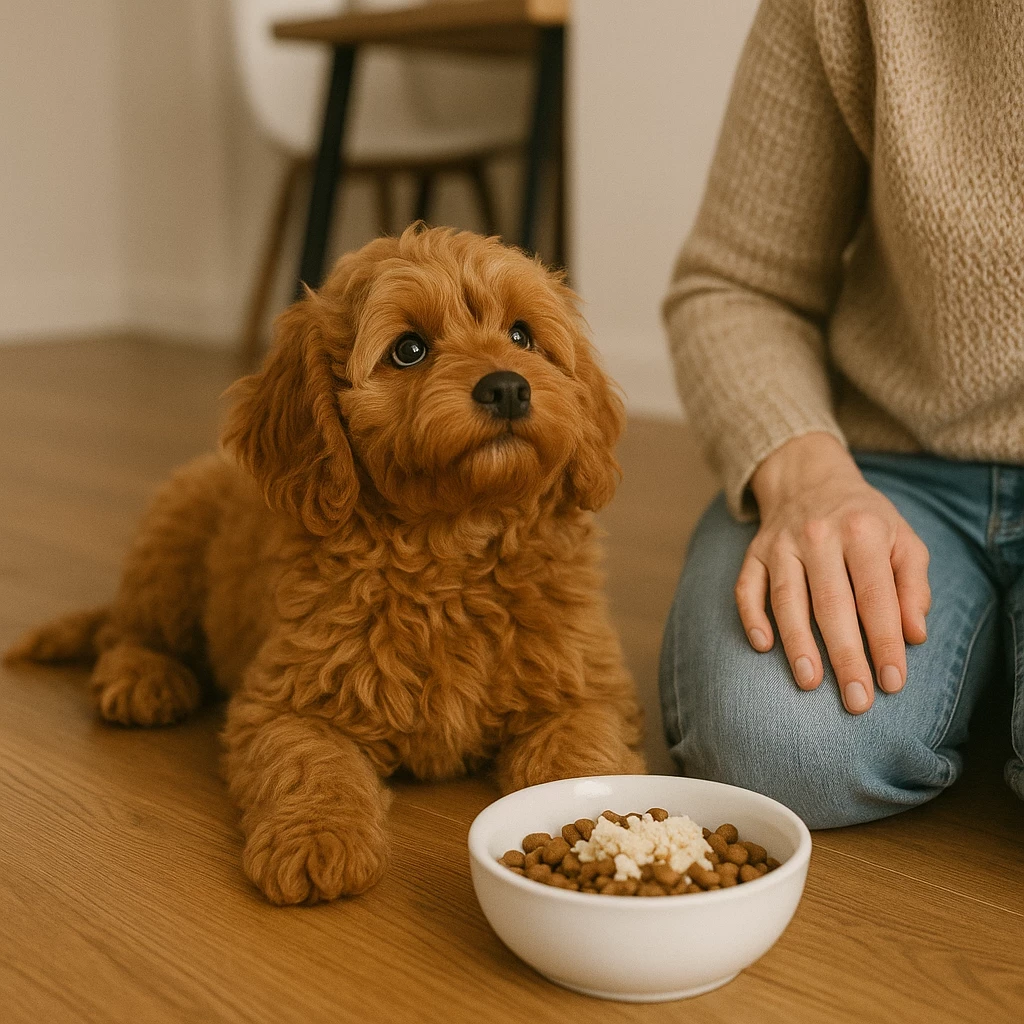
Smell matters a lot to dogs. The Royal Kennel Club suggests warming wet food or soaking dry food in warm water to bring out the aroma. Stir well and test the temperature so it is just warm, not hot.
Small, plain toppers can also help:
Keep toppers small, about 1 to 2 teaspoons, so they do not replace the main meal or upset your dog's balance of nutrients. This amount is a common rule of thumb, not a veterinary standard. Check labels carefully: onions, garlic, chives and leeks can damage a dog's red blood cells and cause anemia, according to the veterinary publication dvm360. The AVMA also lists grapes, raisins, chocolate and xylitol among foods that are dangerous for dogs.
A puzzle feeder or slow bowl can turn a meal into a game. The Royal Kennel Club notes that interactive feeding toys can help dogs that are easily distracted.
A fixed routine is one of the most effective fixes for a fussy eater. The Royal Kennel Club recommends removing the bowl after 15 minutes if your dog has not eaten, then offering fresh food a few hours later. Stay consistent and stop hand-feeding for a while.
Many owners feed a young Cavapoo three small meals a day, for example at about 7 a.m., 1 p.m. and 7 p.m., then move to two meals for an adult. This is a common pattern, not a fixed rule, so ask your vet what fits your dog's age and weight.
Treats are often the hidden reason a dog skips meals. A common guideline is that treats should make up no more than 10% of a dog's daily calories, and WSAVA uses the same 10% limit in its guidance for cats. Keeping treats within that range leaves room for an appetite at mealtime.
The Royal Kennel Club suggests limiting treats to training only. Ask everyone in your household to follow the same rules, and stop feeding from the table. If several people are slipping your dog snacks, even small ones add up fast for a small dog.
If a vet has ruled out illness and your dog still refuses its food, a slow change may help. The Royal Kennel Club recommends switching gradually over 7 to 10 days, mixing in a little more of the new food each day. A sudden change can upset the stomach and make picky eating worse.
Try a small bag first, and change only one thing at a time so you can tell what works. If your dog has vomiting or diarrhea during the switch, slow down and talk to your vet.
Most healthy picky eaters improve once the routine is steady and treats are under control. Sellers and owners commonly say many Cavapoos become less fussy as they mature, often by around 12 to 18 months. Treat that as a typical pattern, not a guarantee.
Some dogs stay a little choosy for life, and dogs with sensitive stomachs may always do best on one consistent, easily digested food. Weigh your dog every few weeks and keep an eye on body condition. A dog that stays at a healthy weight and has good energy is usually getting enough, even if it is not enthusiastic at every meal. If you are still choosing a puppy, AllinPets.com lets breeders list Cavapoo puppies for free and helps buyers browse available listings nationwide. Ask breeders what food each puppy is eating, so you can keep it the same for the first weeks at home.
The most common reasons are too many treats or table scraps, food left out all day, and learned behavior. Dental pain, stomach upset, stress and teething in puppies can also reduce appetite, so a vet check is a good first step.
Many healthy dogs improve within a few weeks of a consistent routine, though stubborn habits can take a couple of months. These are typical patterns, not fixed timelines.
Warmed wet food, kibble mixed with a little wet food, and small plain toppers such as boiled chicken often help. Avoid onion, garlic, grapes, raisins, chocolate and xylitol.
See a vet very quickly if your dog has eaten nothing for more than 24 hours, according to PDSA. Go right away if a puppy refuses food and seems weak or wobbly, or if appetite loss comes with vomiting, diarrhea or low energy.
This article is for informational purposes only and does not replace professional veterinary advice. Always consult a licensed veterinarian about your pet's health.
Written by the AllinPets Editorial Team
