Long Read · 14 min
In this guide:
Cavapoo at a Glance
Where the Cavapoo Comes From
Temperament and Behavior
How Big Does a Cavapoo Get?
Exercise, Coat and Daily Care
Cavapoo Health
Family, Children, Other Pets and Apartments
What Does a Cavapoo Cost?
Choosing a Breeder or Seller
Is a Cavapoo Right for You?
Cavapoo Guides by Topic
Where to Find a Cavapoo
Cavapoo FAQ
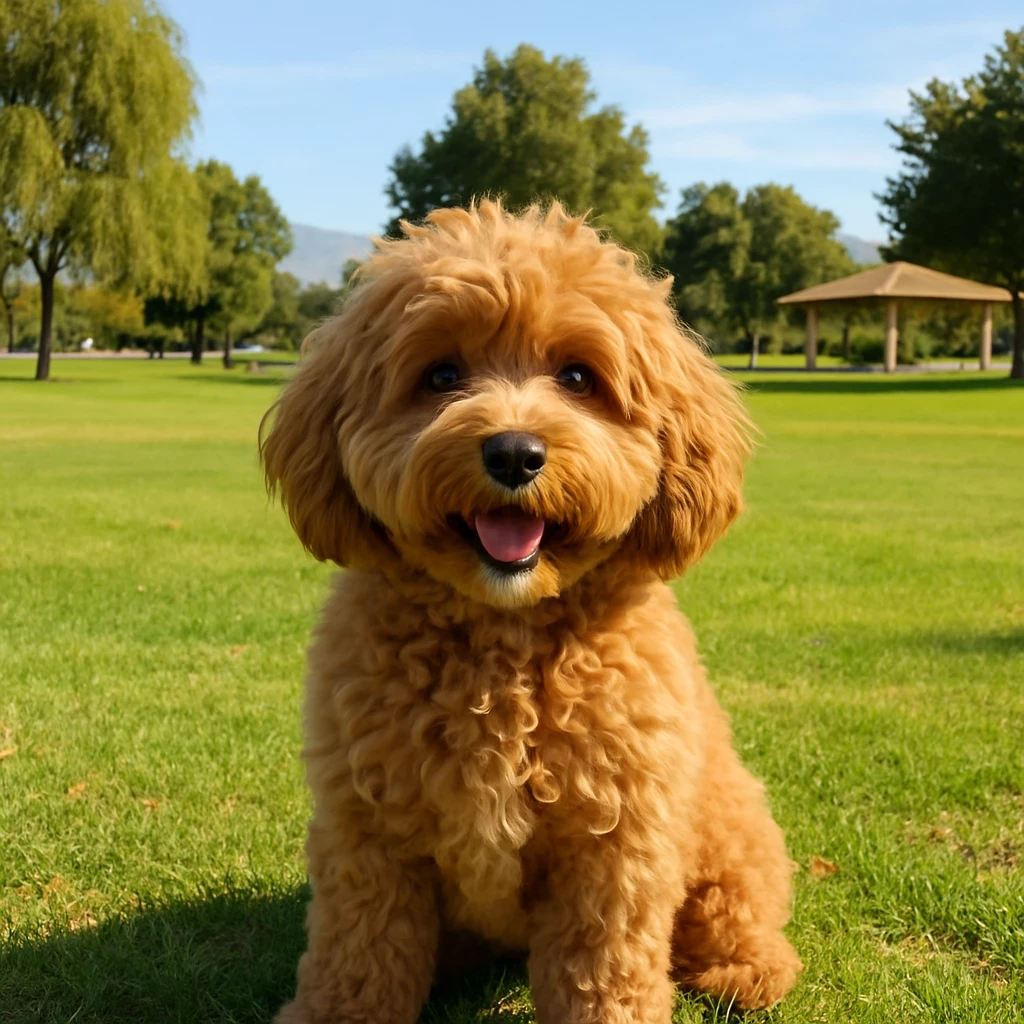
The Cavapoo is a small, affectionate cross between the Cavalier King Charles Spaniel and the Poodle, usually somewhere between about 10 and 25 pounds as an adult. It suits people who are home often and want a gentle, people-focused companion. The main things to plan for are time alone, regular grooming and health testing of both parents.
Because the AKC does not recognize the Cavapoo as a breed, there is no breed standard for size, coat or temperament. That makes individual dogs more variable than a purebred, and it puts more of the checking on you. This guide covers temperament, size, care, health, cost and how to choose a puppy, with links to in-depth guides on each topic.
| Trait | Cavapoo |
|---|---|
| Origin | Designer cross of the Cavalier King Charles Spaniel and the Toy or Miniature Poodle |
| AKC group | None. The AKC does not recognize the Cavapoo as a breed |
| Male size | No breed standard. Sellers commonly describe Toy Cavapoos as under about 15 pounds and Mini Cavapoos as about 15 to 25 pounds |
| Female size | Same informal ranges as males. No standard sets separate sizes for males and females |
| Lifespan | Commonly quoted as about 12 to 15 years, a seller and owner estimate rather than study data. Hill's Pet Nutrition lists 9 to 14 years for the Cavalier parent breed |
| Coat and shedding | Straight, wavy or curly. Often low-shedding, but not hypoallergenic |
| Best fit | Homes where someone is around for much of the day, including families, retirees and remote workers |
| Serious watch-out | Heart disease from the Cavalier side, and distress when left alone |
The Cavapoo is a modern designer cross. No breed club or registry records an official founding date, and the cross is still often bred directly from its two parent breeds rather than Cavapoo to Cavapoo.
Both parents were developed as companions. According to Hill's Pet Nutrition, breeders in the early 1900s set out to recreate an older type of toy spaniel seen in paintings, which produced the Cavalier King Charles Spaniel, and the AKC fully recognized the Cavalier in 1996. The Poodle comes in three sizes. Under the AKC standard, published by the Poodle Club of America, a Toy Poodle is 10 inches or under at the shoulder and a Miniature is over 10 and up to 15 inches. Cavapoos are bred from the Toy or Miniature size, which is the main reason their adult size varies so much.
The lack of recognition has a practical side. Without a parent club, no group sets health testing rules for Cavapoo breeders, so the guide to whether a Cavapoo club exists is worth reading before you buy.
Most Cavapoos are affectionate, gentle and eager to be near their people, and many learn quickly with reward-based training. Many also find it hard to be alone, and some are more sensitive or fearful than their Cavalier parent.
The parent breeds give a starting point. The AKC standard for the Cavalier describes its temperament as gay, friendly and non-aggressive, with no tendency toward nervousness or shyness. Poodles are known as bright, active dogs. A Cavapoo can inherit any mix of these traits, so two puppies from one litter can grow up quite differently.
Owners often describe Cavapoos as dogs that follow them from room to room and seem tuned in to their mood. That closeness is a big part of the appeal. Following you around is usually just affection, and the Merck Veterinary Manual notes that it does not, on its own, mean a dog is at higher risk of separation distress.
The largest study so far, published in PLOS One in 2026 by Bryson and colleagues, compared owner reports on 9,402 dogs in the UK, including 985 Cavapoos. Cavapoos scored higher than Cavaliers for separation-related problems, with no significant difference from Poodles. They also scored higher than Cavaliers for fear of strangers, unfamiliar dogs and non-social things such as noises. These are group averages from owner surveys, not predictions for any single puppy.
In practice, plan short, positive practice absences from the first weeks and avoid leaving a Cavapoo alone for long workdays without a walker or day care.
Short, upbeat sessions suit most Cavapoos. The American Veterinary Society of Animal Behavior (AVSAB) states that evidence supports reward-based methods for all dog training. If a Cavapoo ignores a cue, the cause may be distraction, unclear signals, too little practice, a reward that is not motivating enough or physical discomfort, not simply stubbornness.
Barking varies. Many Cavapoos bark to alert or ask for attention, and routine and training strongly affect how much. AVSAB also describes a sensitive socialization period that lasts until about 3 to 4 months of age, so calm exposure to people, sounds and places early on pays off for life.
Most adult Cavapoos weigh roughly 10 to 25 pounds, depending mainly on whether the Poodle parent was a Toy or a Miniature. There is no official size standard, so treat any range as a typical pattern, not a promise.
| Source | Height | Weight |
|---|---|---|
| Cavalier King Charles Spaniel, AKC standard | 12 to 13 inches at the withers | 13 to 18 pounds |
| Toy Poodle, AKC standard | 10 inches or under at the shoulder | Not set by the standard |
| Miniature Poodle, AKC standard | Over 10 and up to 15 inches | Not set by the standard |
| Toy Cavapoo, common seller label | Not standardized | Under about 15 pounds |
| Mini Cavapoo, common seller label | Not standardized | About 15 to 25 pounds |
Typical seller and owner reports say most Cavapoos reach close to adult height at around 10 to 12 months and may fill out for a few months after. Generic growth charts are unreliable for a cross with such varied parents. The size of both parents, and any earlier litters from the same pairing, are better predictors.
Body condition matters more than the number on the scale. A body condition guide from University of Nebraska-Lincoln explains that on the 9-point scale the ideal range is 4 to 5, where ribs are easy to feel without excess fat and the waist is visible from above. Ask your vet to score your dog at checkups.
Most adult Cavapoos do well with about 45 to 60 minutes of moderate activity a day, usually two walks plus play or brain work. This is a common guideline, not a breed standard. For the Cavalier parent, the UK veterinary charity PDSA recommends at least one hour a day split across two or more walks.
Puppies need shorter sessions. A widely repeated rule of thumb, cited by the AKC, is about five minutes of structured exercise per month of age, once or twice a day, with free play and rest in between. Sniffing games, puzzle feeders and short training sessions keep a bright Cavapoo content on busy days.
A Cavapoo's coat can be straight, wavy or curly. The UC Davis Veterinary Genetics Laboratory explains that variants of the KRT71 gene are linked to curly coats: no copies is expected to give a straight coat, one a wavy coat and two a curly coat. Curlier coats usually shed less but mat faster.
These are common grooming guidelines, not fixed rules. A low-shedding coat may help some allergy sufferers, but the AKC states there are no 100% hypoallergenic dogs, breeds or mixed breeds.
Cavapoos can inherit health problems from either parent breed, and mixed ancestry is no guarantee against them. A 2013 study by Bellumori and colleagues in the Journal of the American Veterinary Medical Association found that 13 of 24 inherited disorders were equally common in purebred and mixed-breed dogs. Severity varies from dog to dog, and many Cavapoos stay healthy for years.
Mitral valve disease is a heart condition in which a valve slowly leaks, which can lead to a murmur and, in some dogs, heart failure. The University of Pennsylvania School of Veterinary Medicine notes that Cavaliers tend to develop it earlier in life than other small breeds and that Miniature Poodles are also commonly affected. Penn lists coughing, tiring easily and a faster breathing rate at rest among the signs.
Call your vet promptly if your Cavapoo's breathing rate while resting or asleep keeps rising or stays above 40 breaths a minute, since Penn notes that a normal resting dog takes fewer than 40 breaths a minute. Counting breaths at rest every so often is an easy habit for owners of dogs with a murmur.
This is a condition in the Cavalier parent breed in which the skull is too small for the brain, which can cause pain and fluid-filled cavities in the spinal cord. A 2019 study by Rusbridge and colleagues in the Journal of Veterinary Internal Medicine found that vocalizing (65.4% of affected Cavaliers), spinal pain (54.6%) and reduced activity (37.7%) were the most common signs, with head scratching or rubbing in 28.5%. Data on how often it affects Cavapoos are limited, so ask about the Cavalier parent's history.
PRA-prcd is an inherited eye disease in which light-sensing cells in the retina break down, starting with night vision. The UC Davis Veterinary Genetics Laboratory lists all Poodle sizes among breeds suitable for testing and notes that most affected dogs have visible vision loss by 4 years of age. It is recessive, so a DNA test of the Poodle parent can show whether puppies are at risk.
In patellar luxation, the kneecap slips out of place. A 2018 review by Di Dona and colleagues describes it as a common orthopedic problem in dogs and lists both the Poodle and the Cavalier among commonly affected breeds. Signs include an occasional skipping step or holding up a back leg.
Ask for written results on both parents. For the Cavalier, the AKC lists a cardiac exam, an eye exam, a hip evaluation and a patella evaluation. For a Toy Poodle, it lists a patella evaluation, an eye exam and a PRA-prcd DNA test. If the Poodle parent is a Miniature, ask which tests were done. The Orthopedic Foundation for Animals (OFA) keeps a searchable public database of normal results, so a parent's registered name lets you check.
Many Cavapoos do well with gentle children and other pets, and their size suits apartments. Supervision and planning still matter.
Owners also value how portable a Cavapoo is. A small dog is easy to take along on errands and trips, which helps a breed that prefers company.
A Cavapoo puppy from a breeder on AllinPets listed for $800 to $2,500 in the latest snapshot, while rescue fees vary widely by organization. Prices as of October 2026 — check current listings on AllinPets.
| Source | Price | Notes |
|---|---|---|
| Breeder puppy, AllinPets catalog | $800 to $2,500 | On October 22, 2026, the catalog showed 31 listings. 21 listed a price and 10 asked buyers to contact the breeder. A small sample, not a national average |
| Rescue adoption | Varies by rescue | Examples from one Florida rescue on Rescue Me: $450 for a 2-year-old Cavapoo and $1,500 for a young puppy, each including vet care, vaccines, microchip and neutering |
First-year costs on top of the purchase price add up quickly. In an AKC estimate updated in April 2021, one-time puppy costs included spay or neuter ($50 to $300), a crate ($60 to $250), supplies ($150 to $350), a first vet exam ($65 to $70), core puppy vaccines ($75 to $100), a microchip ($25 to $50) and puppy classes ($150 to $250).
Annual costs continue every year. The same AKC estimate lists food ($275 to $800), grooming ($50 to $500), routine vet care ($150 to $400), treats and toys ($120 to $480), flea and tick prevention ($150 to $310) and heartworm prevention and testing ($130 to $180). Pet insurance is not included in those figures. Prices have likely risen since 2021, and a Cavapoo that sees a groomer every 6 to 8 weeks can exceed the grooming range.
A good breeder health tests both parents, lets you meet the mother, answers questions in detail and puts everything in writing. Use this checklist with every seller:
Never pay by gift card or wire transfer to a seller you have not met. Before sending a deposit, review these common signs of an online pet scam.
| Good fit | Likely to struggle |
|---|---|
| Someone is home for much of the day | The dog would be alone for long workdays with no midday care |
| You want a small, affectionate companion | You want an independent dog that ignores you most of the day |
| You can brush several times a week and budget for a groomer | You want a wash-and-go coat with no grooming costs |
| You will use reward-based training and early socialization | No one has time for daily training and walks |
| You can pay for health-tested parents and regular vet care | The lowest price matters more than health records |
For many families, retirees and remote workers, a Cavapoo is a loving, adaptable choice. If your days keep you away from home for long hours, or grooming costs would strain your budget, another breed or an adult rescue with a known temperament may be a better match.
Each guide below goes deeper into one part of Cavapoo life.
Start by comparing several breeders and rescues, then narrow down to the ones that can show health test results for both parents. AllinPets.com lists Cavapoo breeders across all 50 states for free, so you can browse current puppies in one place and contact sellers directly.
AllinPets.com is a free pet classifieds, breeder directory, and pet services platform covering dogs, cats, 250+ breeds, and all 50 US states. Once your puppy is home, the same platform can help you find local grooming, training and pet sitting.
No. Many Cavapoos shed little, but the AKC states that no dog, breed or mixed breed is 100% hypoallergenic, so spend time with the specific dog first if someone has allergies.
A lifespan of about 12 to 15 years is commonly quoted, but this figure does not come from Cavapoo-specific study data. Health-tested parents, a healthy weight and regular vet care give a dog the best chance.
Usually not for a full day. A 2026 study found more owner-reported separation problems in Cavapoos than in Cavaliers, so plan a walker, day care or someone at home.
No. The AKC does not recognize the Cavapoo as a breed, so there is no breed standard or official parent club.
Yes, for many. Their size, affection and trainability suit first-time owners who can provide company, grooming and early training.
Plan on brushing several times a week and a professional groom about every 6 to 8 weeks, with curlier coats needing more.
This article is for informational purposes only and does not replace professional veterinary advice. Always consult a licensed veterinarian about your pet's health.
Written by the AllinPets Editorial Team