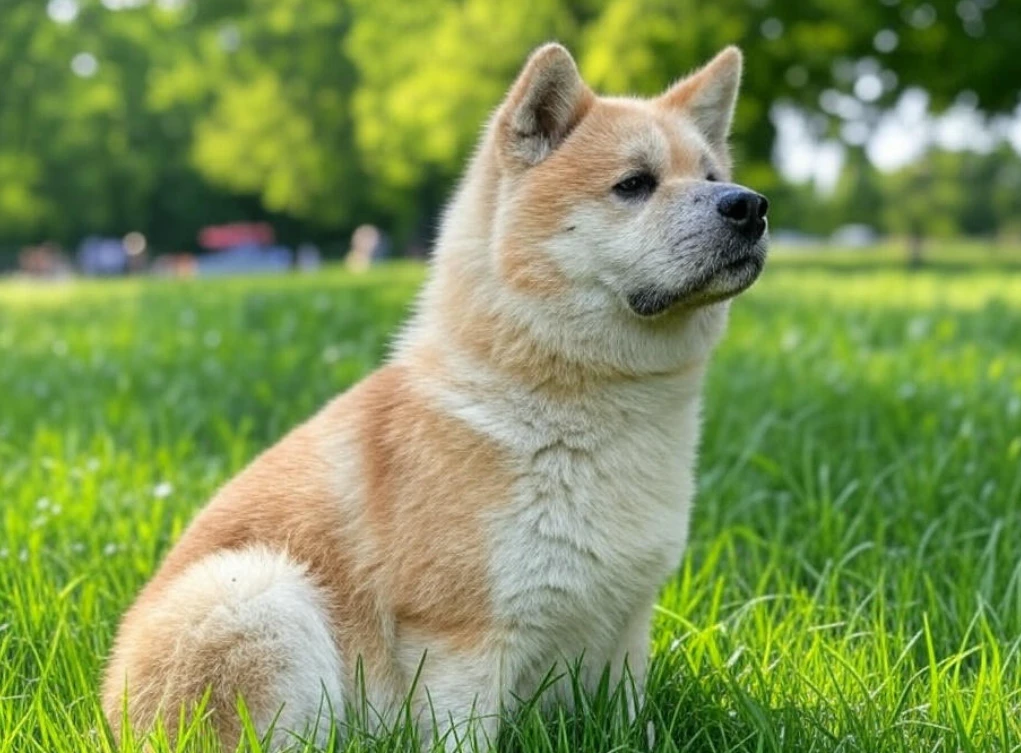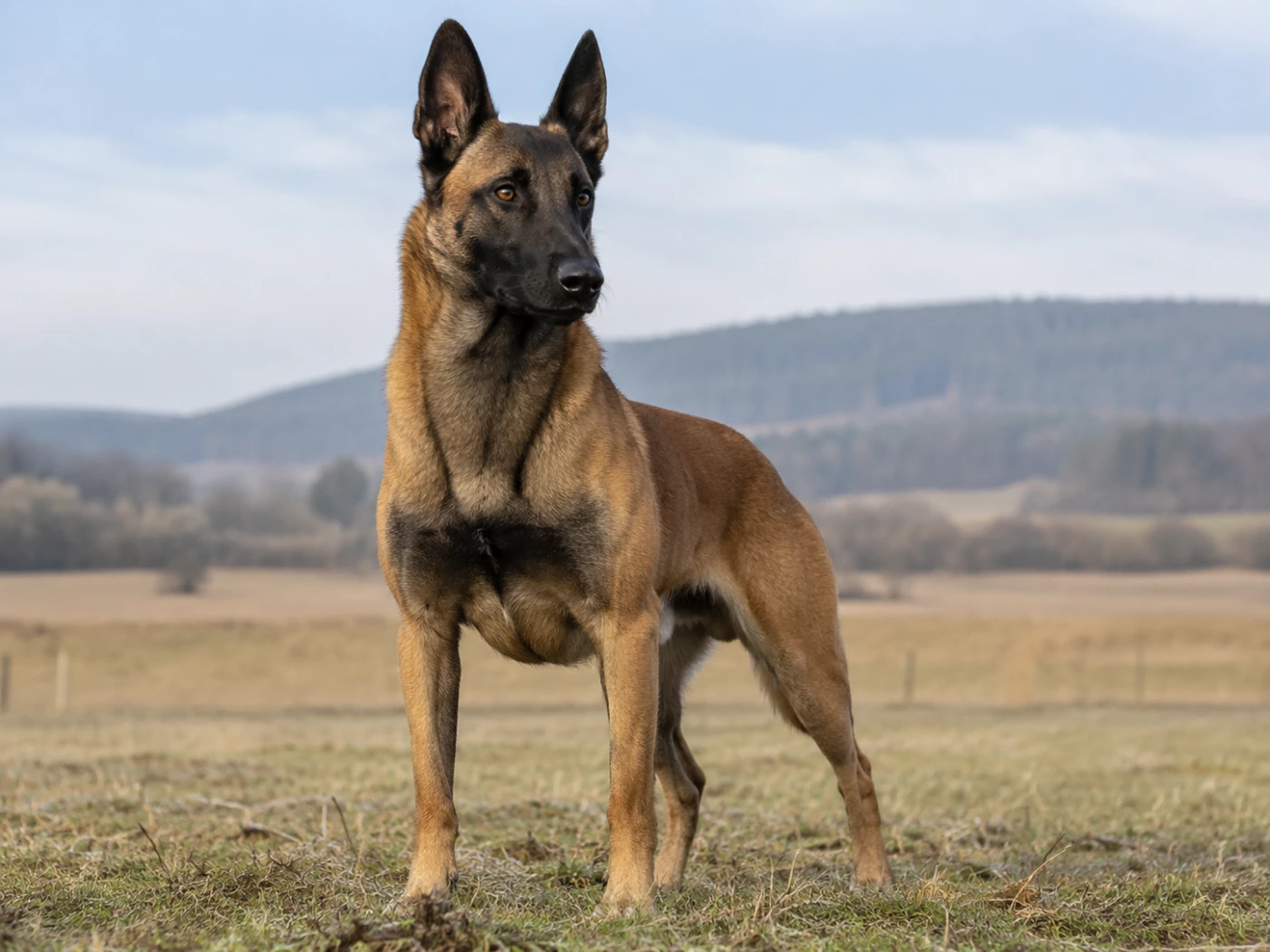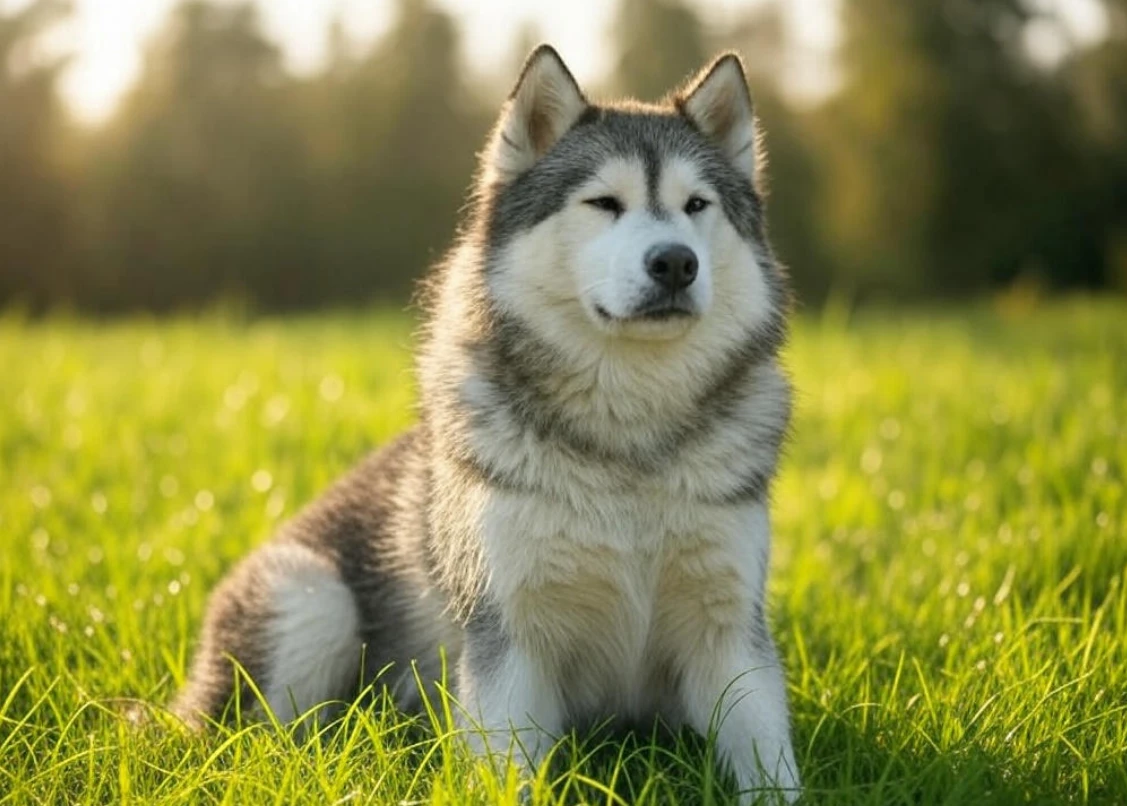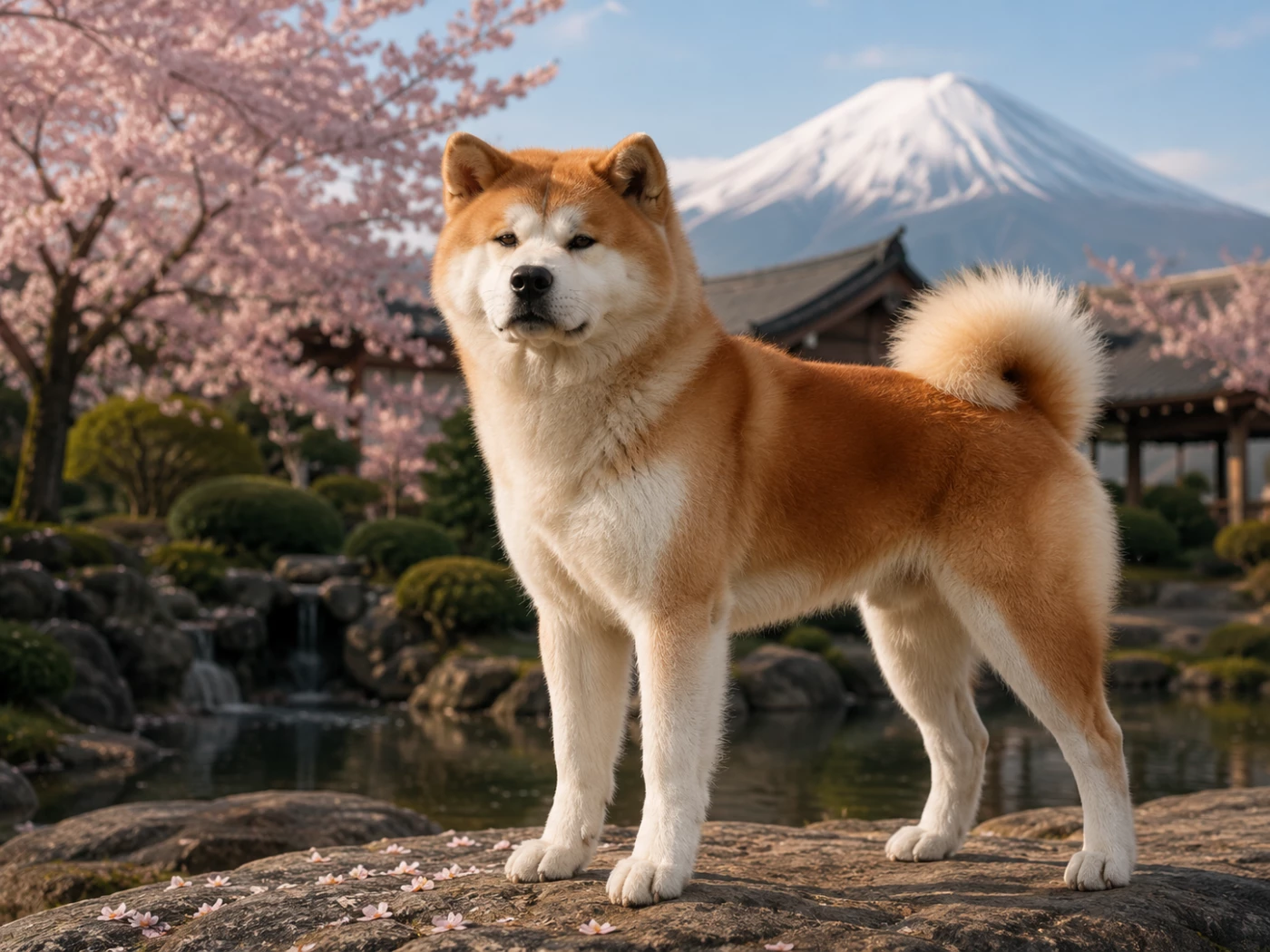
The Akita dog breed is loyal, powerful, reserved, and often misunderstood. It can be deeply devoted to its household, but it also brings guarding instincts, prey drive, independence, and a meaningful risk of conflict with other dogs.
This guide covers the decisions that matter before buying an Akita puppy: temperament, size, exercise, shedding, health testing, current asking prices, and breeder evaluation.
The Akita developed in northern Japan from hunting dogs used in mountainous terrain. The breed later became associated with protection, loyalty, and national cultural importance. Hachikō, remembered for returning to Shibuya Station after his owner died, remains its best-known historical representative.
US buyers may encounter the heavier, broader American Akita and the lighter, more refined Japanese Akitainu. Both are large spitz-type dogs with erect ears, a curled tail, dense coat, strong family attachment, and an independent temperament. The adult dog requires far more management than the appealing puppy suggests.
Akitas often bond closely with their household while remaining reserved with unfamiliar people. They are natural watchdogs and do not need encouragement to become more suspicious or protective.
Owners often describe a dog that follows family members quietly and “talks” through grunts or groans. Akitas learn quickly but may resist repetition. Short, reward-based sessions usually work better than drilling, harsh corrections, or confrontational handling.
The Akita Club of America identifies same-sex intolerance and strong prey drive as important breed characteristics. Individual dogs vary, but buyers should plan for the risk.
Two same-sex dogs may coexist when young and become incompatible at maturity; raising them together does not guarantee permanent compatibility. Some Akitas live with an opposite-sex dog, while others are safer as only dogs.
An Akita raised with one household cat may accept that animal yet still chase unfamiliar cats, wildlife, or small dogs. Secure fencing and controlled introductions are essential management tools.
An Akita can live successfully with respectful children when adults supervise interactions. Size and strength still create risk: no child should climb on, corner, hug, or disturb a resting or eating dog.
Families with toddlers must be able to maintain reliable separation and supervision. Older children who understand canine boundaries are generally a more realistic match. Same-sex dogs and free-roaming small animals add further management demands.
Breed alone does not determine whether a dog will bite. The American Veterinary Medical Association advises evaluating the individual animal’s behavior instead.
Breed tendencies still matter. Genetics, development, pain, socialization, training, environment, and management all influence behavior. Because an adult Akita is powerful, ordinary handling mistakes can have serious consequences.
The American Akita is a large, heavy-boned dog. The AKC breed standard sets adult males at 26–28 inches and females at 24–26 inches at the shoulder. The Akita Club of America describes typical weights of about 100–130 pounds for males and 70–100 pounds for females.
The Japanese Akitainu standard lists males at 25–27½ inches and approximately 65–75 pounds at preferred size. Females stand 22½–25 inches and weigh approximately 55–65 pounds.
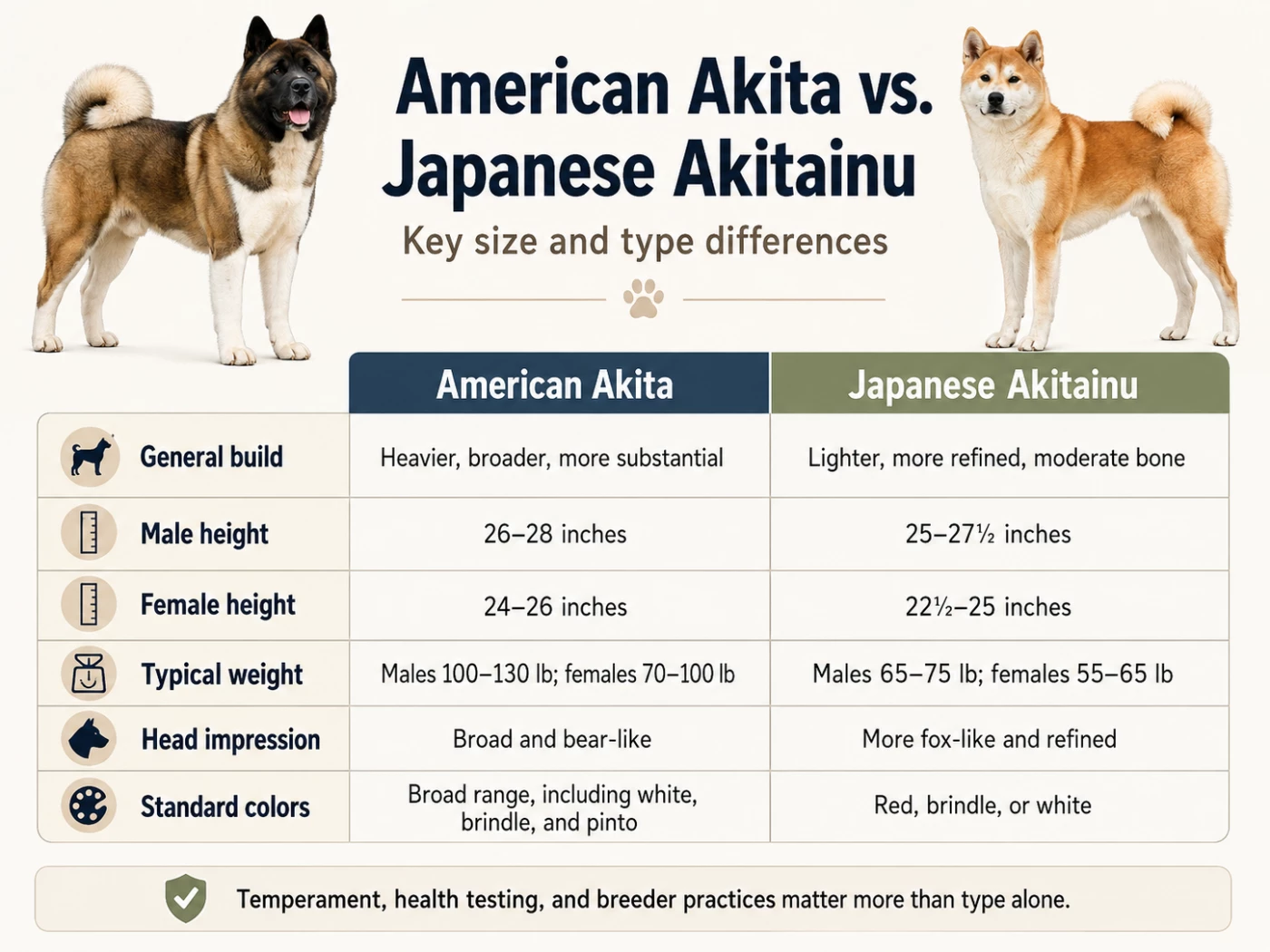
Color and head type matter less than temperament, health testing, breeder practices, and the suitability of the individual dog.
The Akita needs daily activity but is not usually a nonstop endurance dog. Many healthy adults do well with two purposeful outings plus training, sniffing, or secure-yard activity. Puppies and older dogs need age-appropriate adjustments.
Open off-leash exercise is risky. Prey drive, dog intolerance, and independent decision-making can defeat recall, so secure fencing is safer.
Training should cover leash skills, handling, trades, visitor routines, confinement, and controlled exposure. Socialization teaches stability; it does not require greeting every stranger or dog. Apartment living is possible with consistent management, but size, building rules, shared spaces, and heat must be considered.
The Akita has a dense insulating double coat. Weekly brushing is a practical baseline during ordinary periods. About twice a year, many Akitas “blow” the undercoat, releasing large amounts of fur over a concentrated period. Daily brushing may be needed until the loose coat is removed.
The coat should not be shaved for convenience. Routine care usually includes brushing, nail trimming, ear checks, and bathing when needed. Buyers who dislike fur on floors, clothing, and furniture should take the seasonal coat change seriously.
The Akita Club of America lists hip evaluation, an eye examination, and a thyroid panel with thyroglobulin autoantibodies as its minimum recommended breeder health clearances. Elbow, patella, and amelogenesis imperfecta testing are among the additional options.
Ask for the registered names or numbers of both parents and verify results through the issuing database. A statement that the parents were “vet checked” is not equivalent to documented breed-specific screening.
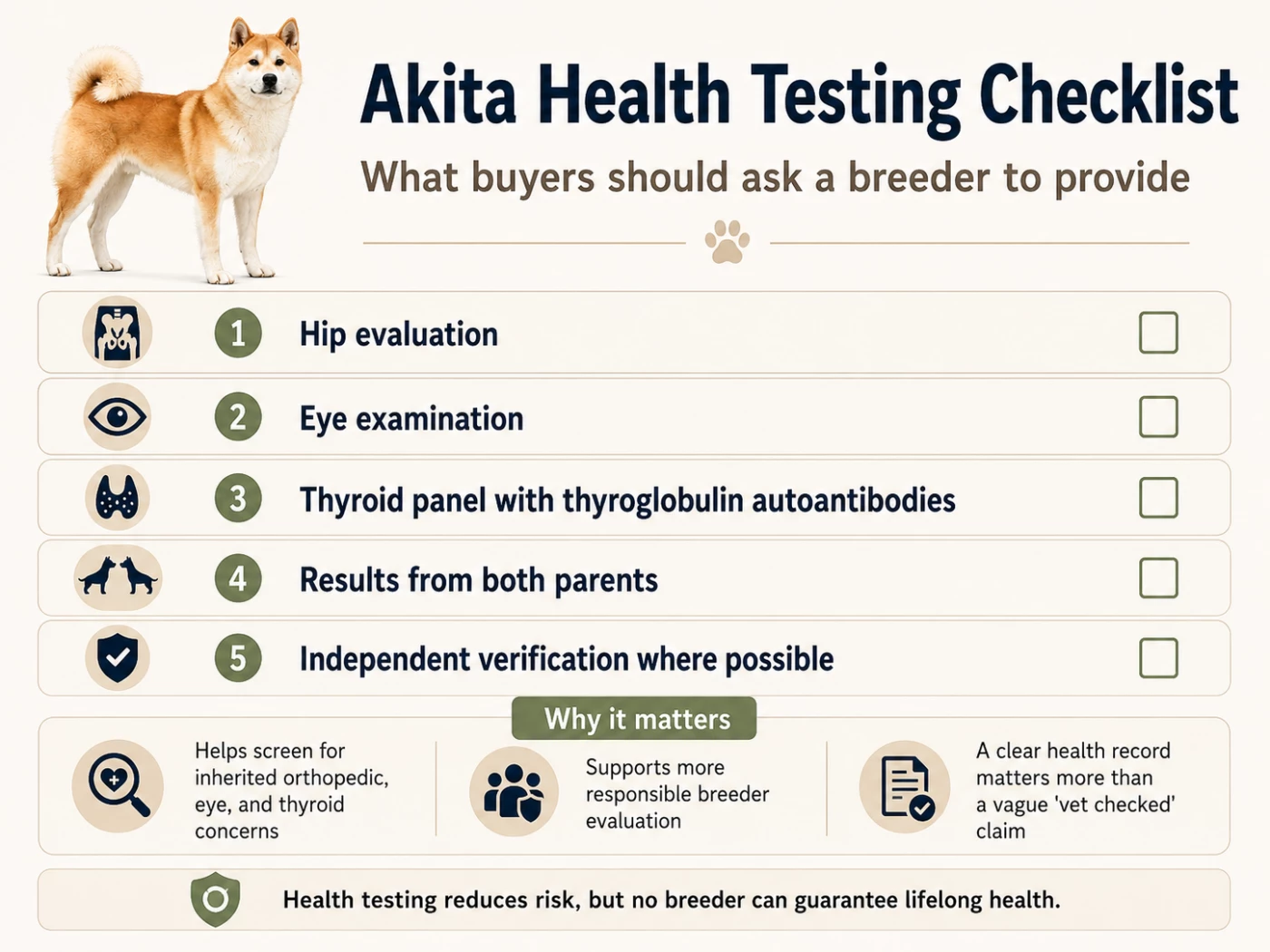
Hip dysplasia is an important large-breed concern. Eye and thyroid screening also matter because the parent club includes them in its core recommendations. The club notes that autoimmune disease occurs in the breed and that not every concern can be excluded with one DNA panel.
Hypothyroidism can contribute to lethargy, weight gain, and coat changes. Sudden physical or behavioral changes require veterinary evaluation rather than assumptions about stubbornness or temperament.
Because Akitas are large, deep-chested dogs, owners should recognize gastric dilatation-volvulus, or GDV. This emergency involves stomach expansion and possible twisting. The Merck Veterinary Manual lists restlessness, abdominal pain or swelling, drooling, and repeated unsuccessful attempts to vomit among possible signs.
Emergency: A swollen abdomen, repeated dry retching, collapse, or sudden severe distress requires immediate veterinary care. Do not wait to see whether it resolves.
Owners of large, deep-chested dogs can discuss individual risk, meal routines, and preventive gastropexy with their veterinarian. No feeding accessory or home remedy can guarantee prevention.
The Akita Club of America reports a typical lifespan of about 10–14 years, although individual longevity depends on genetics, health, environment, and veterinary care.
| Potential advantages | Important challenges |
|---|---|
| Deep attachment to family | Frequently a poor choice for inexperienced owners |
| Naturally watchful and usually not a nuisance barker | Same-sex dog intolerance may develop with maturity |
| Intelligent and capable of learning quickly | Independent; may resist repetitive training |
| Often clean and relatively low in body odor | Heavy seasonal shedding |
| Moderate rather than frantic daily activity | Strong prey drive and unreliable open-area recall |
| Calm, dignified household presence | Large size magnifies handling and management mistakes |
The strongest reason not to choose an Akita is simple: you want a socially easy dog that enjoys dog parks, welcomes unfamiliar pets, and can be trusted off leash. Those expectations conflict with common breed tendencies.
An Akita may suit an owner who values a reserved, closely bonded dog and is prepared to manage interactions rather than leave them to chance. Experience with large, independent breeds is helpful, as are secure fencing, reliable confinement, and access to a trainer who uses humane methods.
The breed may fit:
It may be a poor fit:
Before deciding, compare the Akita with other dog breed guides on AllinPets and review all current dog listings without treating availability as proof of suitability.
Current marketplace data should be treated as asking-price evidence, not a guarantee of quality. In June 2026, Good Dog’s Akita buyer guide reported a national range of approximately $2,300–$3,000, while its Japanese Akitainu buyer guide reported approximately $2,500–$3,500.
| Puppy category | Current US asking range |
|---|---|
| Akita | $2,300–$3,000 |
| Japanese Akitainu | $2,500–$3,500 |
Show prospects, breeding rights, imported dogs, transportation, and unusually accomplished pedigrees may push prices above these ranges. Rescue or rehoming fees, adults, unregistered litters, and anonymous classifieds should not be mixed into the same comparison.
A higher price does not prove responsible breeding. Compare documented parent health testing, temperament history, contract terms, veterinary care, registration, socialization, and breeder support. A suspiciously low price should trigger additional verification, not an automatic accusation.
Prices as of June 2026 — check current listings on AllinPets.
Breed-club directories and established marketplaces are starting points, not guarantees. The Akita Club of America explicitly disclaims guarantees about listed breeders, dogs, health claims, and contracts.
Ask for:
A responsible breeder should also ask about fencing, pets, children, work schedule, training plans, and prior dog experience.
Compare current Akita listings, asking prices, and seller information on AllinPets, then verify every claim directly before paying a deposit.
AllinPets.com lists Akita breeders across all 50 states for free — browse active listings, compare breeders, and reach out directly with no fees or middlemen.
Written by the AllinPets Editorial Team
An Akita can be devoted to its family, but it is generally better suited to experienced owners and respectful older children. Adults should supervise all child-dog interactions. Families with toddlers must be able to maintain reliable separation, calm routines, and close supervision.
Current June 2026 marketplace ranges are approximately $2,300–$3,000 for an Akita and $2,500–$3,500 for a Japanese Akitainu. Show prospects, breeding rights, imports, and transportation may cost more. Price alone does not establish breeder quality.
American Akita males typically weigh about 100–130 pounds and females 70–100 pounds. Japanese Akitainu are lighter, with preferred weights around 65–75 pounds for males and 55–65 pounds for females. Adult size varies by sex, type, pedigree, and body condition.
Breed alone cannot predict whether a dog will bite. However, Akitas commonly have guarding instincts, prey drive, and possible same-sex dog intolerance. Stable temperament, responsible breeding, reward-based training, controlled introductions, health, and daily management all influence how an individual dog behaves.
Some can, but compatibility should never be assumed. Same-sex conflict may emerge as dogs mature, even when they were raised together. An Akita may accept a familiar household cat yet chase unfamiliar small animals. Controlled introductions and separation plans are important.
Most healthy adults benefit from daily walks, structured play, sniffing, and short training sessions. The breed usually needs moderate rather than nonstop exercise. Open off-leash activity is risky because prey drive, dog intolerance, and independent decision-making can override recall.
Yes, especially during seasonal coat changes. Akitas often release large amounts of undercoat roughly twice a year and may need daily brushing during those periods. Weekly brushing is a practical baseline at other times, although individual coat and climate affect shedding.
The Akita Club of America recommends hip evaluation, an eye examination, and a thyroid panel with thyroglobulin autoantibodies as minimum breeding clearances. Ask for results from both parents and verify them independently rather than accepting a general “vet checked” statement.
This article is for informational purposes only. Always consult a licensed veterinarian.