Long Read · 12 min
In this guide:
Belgian Malinois at a Glance
Where the Belgian Malinois Comes From
Temperament and Behavior
Military, Police and Working Roles
Size and Growth
Exercise, Coat and Daily Care
Health and Common Conditions
Family, Children, Other Pets and Apartments
What a Belgian Malinois Costs
Choosing a Breeder or Seller
Is a Belgian Malinois Right for You?
Where to Find a Belgian Malinois
FAQ
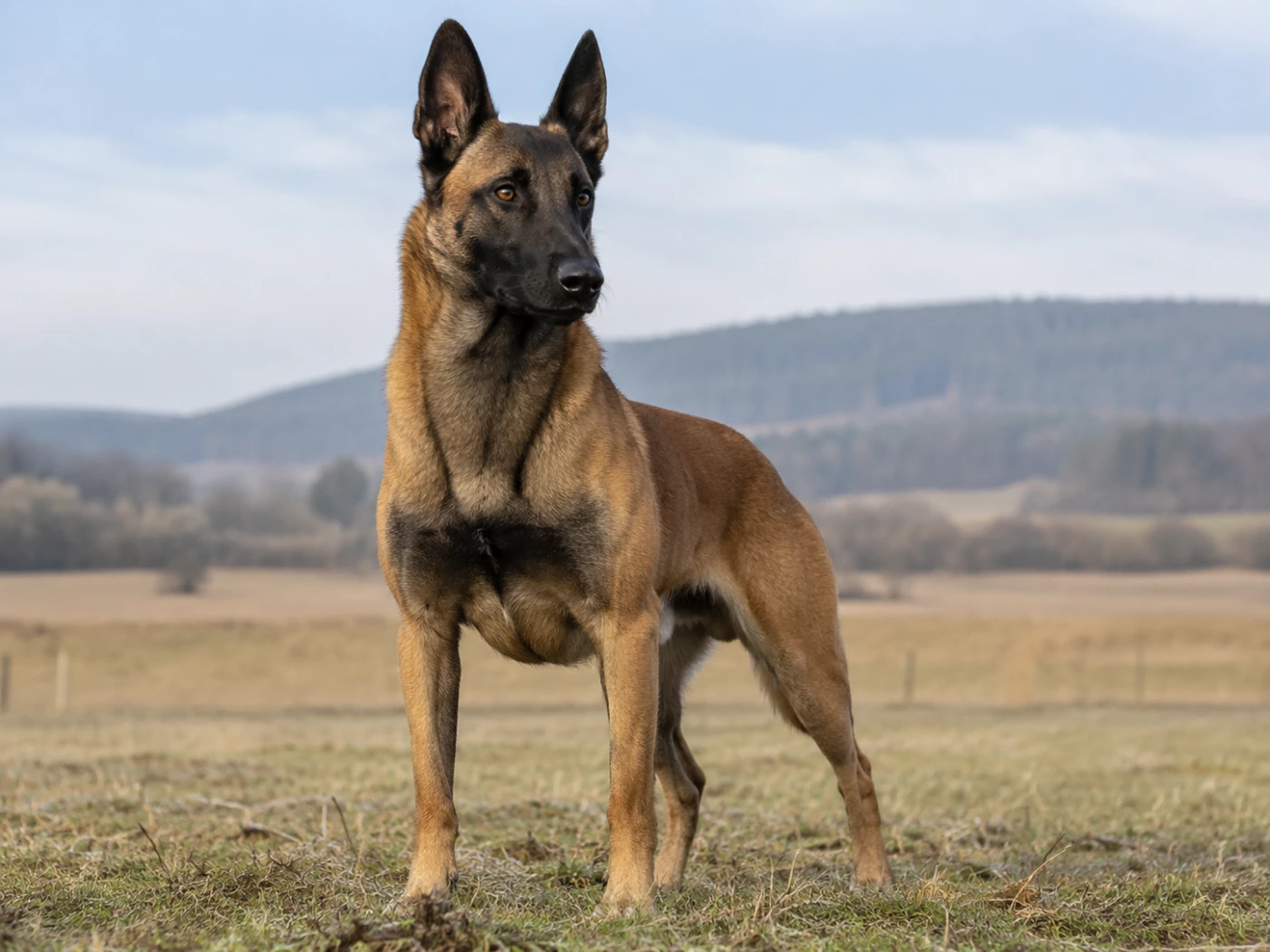
The Belgian Malinois is a compact, intensely driven herding dog built for work. It is fast, alert, athletic and deeply focused on its handler, but it is not an easy family pet. This breed fits experienced, active owners who want a real working partner and can provide daily structure, training and hard exercise. A bored or under-managed Malinois can become destructive, noisy, anxious or difficult to control, so choosing this breed should be a practical decision, not an emotional one.
The quick facts below describe the typical Belgian Malinois, but individual dogs vary by bloodline, breeder, early socialization, training and home environment. Working lines, sport lines and companion lines can feel very different in daily life.
| Trait | Belgian Malinois |
|---|---|
| Origin | Belgium, near the city of Malines, also called Mechelen |
| Breed family | One of the Belgian Shepherd varieties, alongside the Tervuren, Groenendael and Laekenois |
| AKC group | Herding Group, recognized as a separate AKC breed in 1959 |
| Male size | 24 to 26 inches tall, about 60 to 80 pounds |
| Female size | 22 to 24 inches tall, about 40 to 60 pounds |
| Life expectancy | Often listed around 12 to 16 years, depending on source, line and individual health |
| Coat and shedding | Short, weather-resistant double coat with moderate year-round shedding and heavier seasonal sheds |
| Energy level | Very high, with a daily need for physical exercise and mental work |
| Best fit | Experienced owner who wants a working, sport or advanced training partner |
| Main challenge | Extreme drive, strong prey instinct and low tolerance for boredom |
The Belgian Malinois takes its name from the Malines region of Belgium, known today as Mechelen, where this short-coated type of Belgian Shepherd became common among local shepherds. The Belgian Shepherd family includes four closely related varieties: the Malinois, Tervuren, Groenendael and Laekenois. They share a similar working body type and differ mainly in coat length, texture and color.
The breed developed in the late 1800s as Belgian farmers and herders sorted local working dogs into more defined types. The Malinois was valued because it could move livestock, guard property, stay responsive to a handler and work for long hours. Those original farm-dog traits still shape the modern breed. A Malinois notices movement, reacts quickly and wants a task to finish.
The Belgian Malinois was introduced to the United States in the early 1900s and was recognized by the American Kennel Club as a separate breed in 1959. In many countries, Belgian Shepherd varieties are still treated as varieties of one breed, while in the United States they are recognized separately. For buyers, that history matters because Malinois puppies may come from very different lines, including working, sport, show and companion-focused backgrounds.
The Belgian Malinois temperament is defined by drive, focus, speed and a strong desire to work with a handler. A well-bred Malinois is confident, responsive and deeply bonded to its people. It can be affectionate with its family, but it is usually reserved rather than openly social with strangers. Proper socialization teaches neutrality and control; it does not turn the breed into a low-drive greeting machine.
This breed is often described as intelligent, but the more useful word is intense. A Malinois learns quickly, watches patterns and reacts fast. That is a strength in training and a problem in an unstructured home. If the owner is inconsistent, the dog may learn unwanted routines just as quickly as good ones.
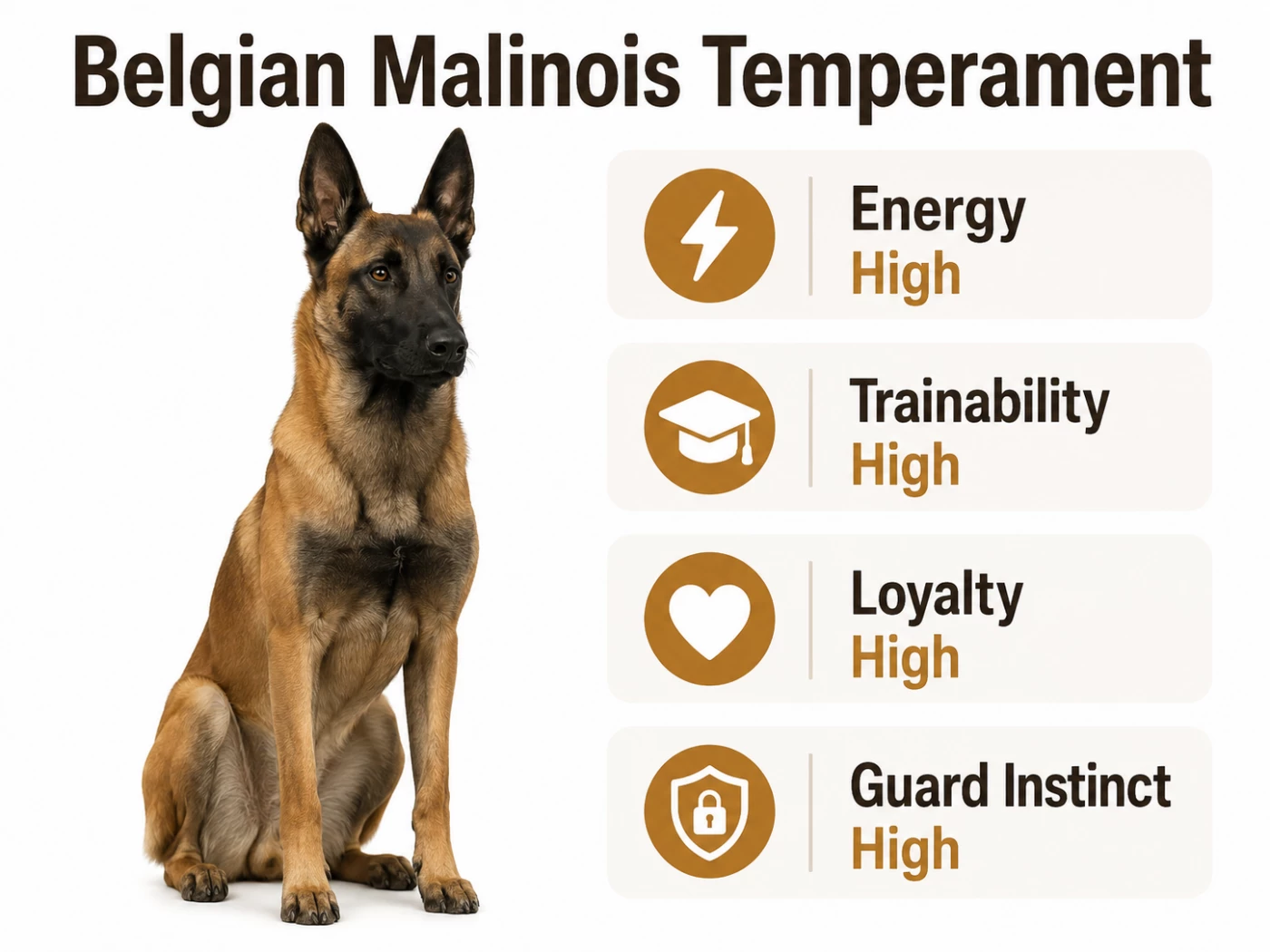
Drive is the defining Malinois trait. This is a dog that wants to chase, grip, search, track, solve problems and work for a reward. If the owner gives the dog a safe outlet, that drive can become beautiful obedience, scent work, agility, tracking or sport performance. If the owner does not, the dog may create its own job through barking, digging, chewing, fence-running or chasing motion.
The breed's herding background can also show up as heel-nipping, circling and chasing moving targets. Running children, joggers, bicycles, cars, cats and small animals can trigger those instincts. Training and management help, but the instinct itself should be expected, not treated as a surprise.
Malinois are famously trainable, but trainable does not mean easy. It means they learn quickly and stay highly engaged when the reward and task make sense. Clear rules, consistent handling and reward-based training are especially important because this breed can become frustrated or over-aroused when corrections are unclear or the owner cannot control the situation.
Breed-intelligence rankings often place the Malinois high for working and obedience ability, but that measures a narrow skill set. It does not mean the dog will be simple to live with. When a Malinois ignores a cue, the reason may be distraction, high arousal, incomplete training, confusion, poor timing, lack of motivation or discomfort. Assuming deliberate defiance is less useful than reading the dog and improving the setup.
The Belgian Malinois is one of the most widely used police, military, detection and protection dogs today. Handlers value the breed for speed, agility, courage, scenting ability, focus and a lighter frame than many German Shepherd Dogs. Malinois can be seen in police K9 work, military K9 roles, explosives detection, narcotics detection, search and rescue, tracking, patrol work and protection sports.
The breed's public reputation grew through high-profile military stories, including Cairo, the Malinois connected with the 2011 operation involving Osama bin Laden. That kind of story shows the breed's capability, but it can also mislead casual buyers. The traits that make a Malinois impressive in elite work are the same traits that can make it overwhelming in a normal pet home.
A family should not choose a Belgian Malinois only because it looks impressive, protective or athletic. The better question is whether the household wants to train, manage and live with a dog built to work every day. For many people, a calmer herding, sporting or companion breed is a better fit.
The Belgian Malinois is often compared with the German Shepherd Dog, but the Malinois is usually lighter, squarer and quicker. Adult males typically stand 24 to 26 inches at the shoulder and weigh about 60 to 80 pounds. Adult females usually stand 22 to 24 inches and weigh about 40 to 60 pounds. The breed should look strong and athletic without being bulky.
Malinois puppies grow quickly during the first six months, then continue maturing through the second year. Many reach close to adult height before they fully fill out in muscle. A lean adolescent Malinois is common, especially in active lines, but the dog should still have good condition, steady energy and a healthy appetite.
Generic month-by-month growth charts can be misleading because bloodline strongly affects adult size. A compact working-line dog and a heavier show-line dog may both be normal. Instead of chasing exact numbers, track body condition, steady growth, stool quality, appetite, energy and veterinary feedback. The size of the parents is usually a better clue than an average chart.
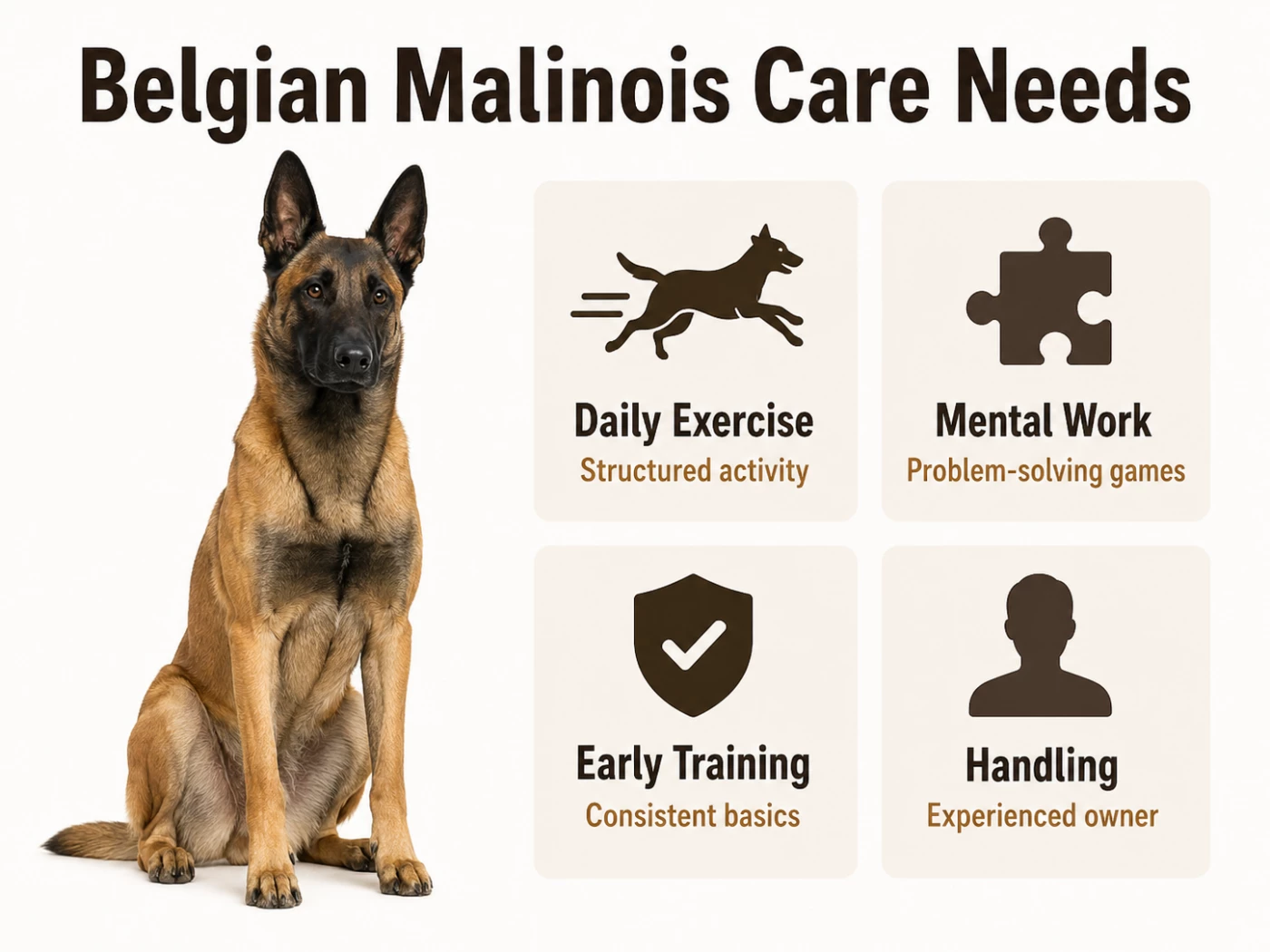
Plan on serious daily exercise for an adult Belgian Malinois. Many dogs need 90 minutes or more of active physical and mental work each day, and some need more. A short walk around the block is not enough. This breed does best with structured exercise, not random chaos.
Good outlets include running, long hikes, structured fetch, tug with rules, agility, obedience drills, tracking, scent games and controlled sport work. Mental work matters as much as physical effort. A Malinois that has to think, wait, search and respond is usually calmer at home than one that only runs in circles until exhausted.
Grooming is much easier than behavior management. The Belgian Malinois has a short, straight, weather-resistant double coat. Weekly brushing is usually enough most of the year, while heavier seasonal shedding may need more frequent brushing. Bathe only as needed, and keep nails trimmed so the dog can move comfortably.
Routine care should also include tooth brushing, ear checks, eye checks and regular veterinary visits. The breed standard calls for firm, upright ears, not semi-prick ears. Owners should still check the ears for dirt, odor, redness or irritation after swimming, dust, heavy outdoor work or rough play.
Start foundation skills early. Crate comfort, recall, leash manners, impulse control, calm greetings, handling tolerance and a reliable "leave it" are not optional extras in this breed. They are part of basic safety.
The Belgian Malinois is generally an athletic and durable breed, but it is not free of health risk. A responsible buyer should ask about orthopedic testing, eye screening, seizure history, cancer history, temperament and the health of close relatives. A dog can look powerful and energetic while still carrying inherited or developmental risk.
Bloat, also called gastric dilatation-volvulus or GDV, is a life-threatening emergency in deep-chested dogs like the Malinois. Warning signs can include a swollen or distended belly, repeated unproductive retching, drooling, restlessness, weakness or collapse. If you see these signs, seek emergency veterinary care immediately.
Key conditions to understand include:
A responsible Belgian Malinois breeder should be able to show hip evaluation, elbow evaluation and a current eye examination by a board-certified veterinary ophthalmologist for both parents. Ask for registered names and documentation, not only verbal assurance that the parents are healthy. Registration alone does not prove health, temperament or breeder quality.
Health testing reduces risk, but it does not guarantee a perfect puppy. Buyers should also ask about temperament stability, working drive, previous litters, return policy, age-appropriate veterinary care and why the breeder thinks a specific puppy fits the buyer's home.
This article is for informational purposes only and does not replace professional veterinary advice. Always consult a licensed veterinarian about your pet's health.
A Belgian Malinois can live in a family, but it is not an easy family dog. It is usually a poor choice for first-time owners, very busy households or homes that want a low-maintenance companion. This is a management-heavy breed, and honesty before purchase prevents problems later.
With children, the best match is usually a home with older, dog-savvy kids who follow rules. A young or under-trained Malinois may chase, jump at or nip running children because of herding and prey-driven instincts. That does not make the dog bad, but it does mean supervision, structure and training are essential.
With other pets, results vary. A Malinois raised with another dog can do well, but strong prey drive makes cats and small animals a real risk. Introductions should be slow, controlled and supervised. Some Malinois should never be trusted loose with small pets.
Apartment living is possible only in limited cases. The apartment itself will never be enough outlet for the dog. A renter with serious daily training, outdoor exercise and a plan for noise, arousal and building rules may manage it, but a person relying on short walks will struggle. Secure fencing is helpful, but a yard is not a substitute for a job.
Belgian Malinois prices vary widely because a companion puppy, a sport prospect, a working-line puppy and a trained adult protection dog are not the same product. Treat the ranges below as planning ranges checked in July 2026, not guaranteed prices and not an AllinPets average.
| Source | Typical planning range |
|---|---|
| Companion puppy from a health-testing breeder | About $1,000 to $3,500 |
| Working or sport-line puppy from titled or specialized lines | Often higher than companion pricing |
| Rescue or rehome adoption | Often a few hundred dollars, depending on organization and dog |
| Trained adult working or protection dog | Can cost dramatically more than a puppy |
The purchase price is only the beginning. First-year costs may include veterinary exams, vaccines, parasite prevention, spay or neuter discussion, crate, leash, collar, bowls, toys, training tools, puppy classes and better fencing or home setup. Depending on location and choices, the first year can add several hundred to several thousand dollars beyond the dog itself.
Annual costs after the first year include food, routine veterinary care, preventives, toys, replacement gear, training, sport fees, insurance if used and emergency savings. The Malinois is not an expensive grooming breed, but it can become expensive through training, behavior help, sport work, travel and equipment if the owner is serious about meeting the breed's needs.
Choosing the right Belgian Malinois breeder matters because health, temperament and drive level shape daily life. A puppy from serious working lines may be too much for a normal pet home, even if it is healthy and well bred. A responsible seller should help match the puppy to the buyer's experience, not simply sell the most intense dog to anyone who pays.
Before committing to a puppy, ask for:
Red flags include pressure to pay immediately, refusal to show health documentation, vague answers about the parents, no written agreement, no questions about your experience and claims that registration alone proves quality. Verbal promises are harder to prove and should be included in the written contract.
The honest test is not whether you admire the breed. It is whether your daily life fits the breed. A Malinois can be one of the most rewarding dogs a skilled owner will ever have, but it is unforgiving when placed in the wrong home.
| Good fit | Likely to struggle |
|---|---|
| Experienced owners who enjoy daily training | First-time owners who want an easy family dog |
| Active homes interested in obedience, scent work, sport or structured tasks | Homes with little time for exercise or training |
| Owners who can manage prey drive and arousal | Homes with very young children and no working-dog experience |
| People who want a true working partner | People who want a low-key couch companion |
If most of your honest answers land in the left column, the Belgian Malinois may be a strong match. If they land on the right, choosing a calmer breed is the responsible decision. There is no shame in that choice; it protects both the owner and the dog.
Once you are sure the breed fits your life, start with health-testing breeders, breed-specific rescues and sellers who answer hard questions clearly. Avoid buying only because a puppy is nearby, cheap or available immediately. With a breed this intense, the wrong match can be costly and stressful.
AllinPets.com lists Belgian Malinois breeders across all 50 states for free, so buyers can browse available listings, compare sellers and reach out directly. AllinPets.com is a free pet classifieds, breeder directory and pet services platform covering dogs, cats, 250+ breeds and all 50 US states.
A Belgian Malinois can be a good family dog for experienced owners with older, dog-savvy children and time for daily training. It is usually not a good match for first-time owners, toddlers or households that want a low-maintenance pet.
Belgian Malinois are generally not recommended for first-time owners. This is a high-drive working breed that needs structure, training, socialization and daily work. Most first-time owners are better served by a calmer and more forgiving breed.
Many adult Belgian Malinois need 90 minutes or more of active physical and mental work each day. Running, hiking, scent games, obedience training, tracking and controlled sport work are usually more useful than short leash walks alone.
A companion puppy from a health-testing breeder often costs about $1,000 to $3,500, while working or sport-line puppies may cost more. Rescue or rehome adoption is often lower. Total ownership cost also includes training, food, veterinary care, gear and emergency savings.
Belgian Malinois can be affected by hip dysplasia, elbow dysplasia, eye disease, epilepsy, cancer history and bloat. Responsible breeders screen parents for hips, elbows and eyes, and buyers should ask about the health history of close relatives.
Belgian Malinois shed moderately year-round and more heavily during seasonal shedding periods. Their short double coat is easy to care for, but regular brushing helps reduce loose hair.

Written by the AllinPets Editorial Team.