
Short Read · 6 min
French Bulldogs are typically affectionate, people-oriented, and adaptable to apartment or house living, though individual personality varies meaningfully from dog to dog. They're generally easy to live with, but a handful of breed tendencies are worth understanding before you bring one home.
Most French Bulldogs are described as friendly, playful, and closely bonded to the people in their household. They tend to be lower-energy than many breeds, and short daily walks combined with indoor play are often enough to keep a typical Frenchie satisfied. That said, individual activity needs still vary within the breed, and some French Bulldogs are notably more energetic and playful than others, so it's worth meeting a specific puppy or adult dog rather than assuming every Frenchie behaves identically.
Frenchies are also known for a strong sense of humor and personality, often described by owners as clownish or comedic in how they interact with their families. This isn't a formally measured trait, but it's a consistent pattern reported across a wide range of owner experiences, and it's part of what draws many people to the breed in the first place.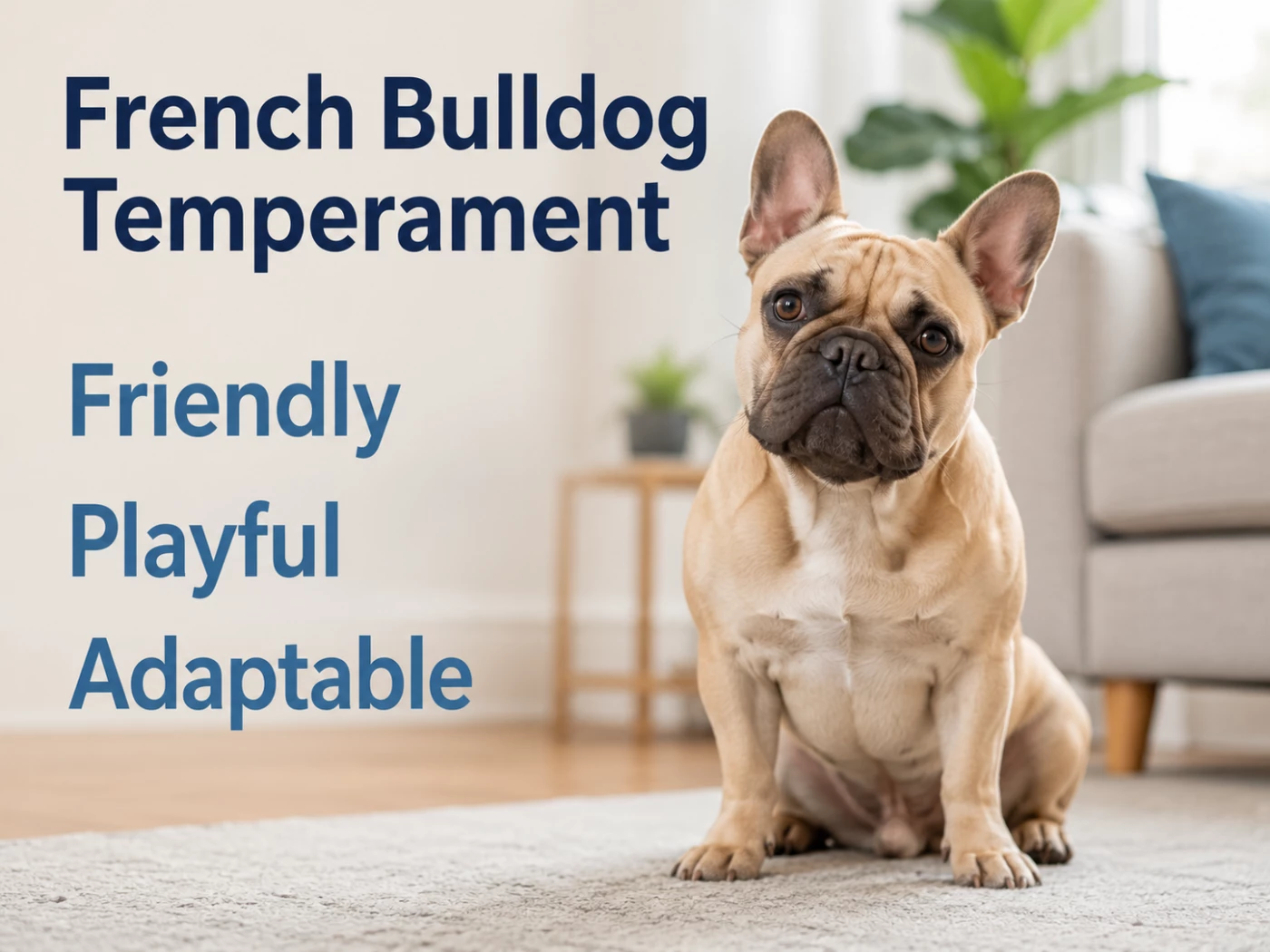
French Bulldogs are generally trainable, though they can be independent-minded at times, which some owners describe as mild stubbornness. When breed-ranking studies, such as Coren's well-known rankings of obedience and working intelligence, place a breed lower on that particular scale, it reflects a narrow, specifically measured metric: typically the speed at which a dog learns and reliably follows new commands under controlled testing conditions. It does not reflect the dog's overall intelligence, problem-solving ability, or emotional capability, all of which are much harder to reduce to a single ranking.
A French Bulldog that seems stubborn or slow to respond during a training session is often responding to something specific rather than deliberately refusing to cooperate. Common underlying causes include simple distraction in a new or busy environment, an unclear or inconsistent cue from the handler, physical discomfort worth ruling out given the breed's known airway sensitivity, or a command that simply hasn't been reinforced consistently enough yet to become reliable. Treating apparent stubbornness as a signal to investigate, rather than as a fixed personality flaw, tends to produce better training outcomes.
The American Veterinary Society of Animal Behavior recommends reward-based training methods for all dogs, and specifically cautions against the use of aversive training techniques due to documented risks to animal welfare and to the trust between dog and handler. This guidance applies to French Bulldogs exactly as it applies to any other breed. Food rewards, play, and enthusiastic praise used consistently tend to produce more reliable long-term results than correction-based methods, and they also tend to build a stronger overall relationship between dog and owner.

French Bulldogs are commonly considered good companions for children, largely due to their sturdy, compact build and generally patient temperament around people of all ages. That said, as with any breed, direct supervision and teaching children how to handle a dog appropriately remain essential. No breed, including this one, should be considered fully "kid-proof" based on reputation alone, and even the most patient individual dog has limits that young children may not recognize without guidance from an adult.
Most French Bulldogs socialize reasonably well with other dogs and cats, particularly when they're exposed to other animals early and positively during puppyhood. Individual dogs vary in this regard, and some French Bulldogs can be more selective or reactive around unfamiliar dogs outside their own household, even if they get along well with animals they already know. Structured, gradual introductions and consistent early socialization during the first several months of a puppy's life tend to make a meaningful, lasting difference in how comfortable an adult Frenchie is around other animals later on.
French Bulldogs are not typically heavy or frequent barkers compared to many small dog breeds, which is part of why they tend to do well in apartment settings. They are, however, alert to their surroundings and will often bark to signal something unusual, such as a visitor at the door or an unfamiliar sound outside. This alertness generally functions more as a useful, occasional watchdog trait than as a persistent nuisance behavior, though as with training, individual dogs can develop more frequent barking habits if it's inadvertently reinforced.
Because French Bulldogs tend to bond closely and consistently with their owners, some individuals are prone to separation-related stress when left alone for long stretches without any prior conditioning. This can show up as whining, destructive behavior, or general distress when the dog is left by itself, particularly if alone time is introduced suddenly rather than gradually. Building up a dog's tolerance for being alone gradually, starting in puppyhood with short, low-stress absences that slowly increase in length, is commonly recommended by trainers as a way to prevent separation difficulties from becoming a persistent, harder-to-address issue later on. If you're already sold on the breed's personality, our Cost guide for the breed breaks down what to budget for, and our Choosing a Breeder guide walks through what to check before you buy.

Generally yes, particularly with consistent, reward-based methods, though individual dogs vary in how quickly they pick up new commands and how much repetition they need before a behavior becomes reliable.
No. Most French Bulldogs do well with short walks and indoor play sessions, and their brachycephalic airway structure makes them poorly suited to intense or prolonged exercise, especially in hot or humid weather.
Yes, for many owners. Their comparatively low exercise needs and generally quiet nature relative to many small breeds make them well-suited to apartment living, though individual energy levels still vary.
Many do, especially with early and gradual socialization, though individual compatibility depends on both animals' personalities and how the introduction is handled.
AllinPets.com lets breeders list French Bulldog puppies for free and helps buyers browse available listings nationwide. See French Bulldog puppies available now, or check our French Bulldog breed guide for a full overview.
Written by the AllinPets Editorial Team.