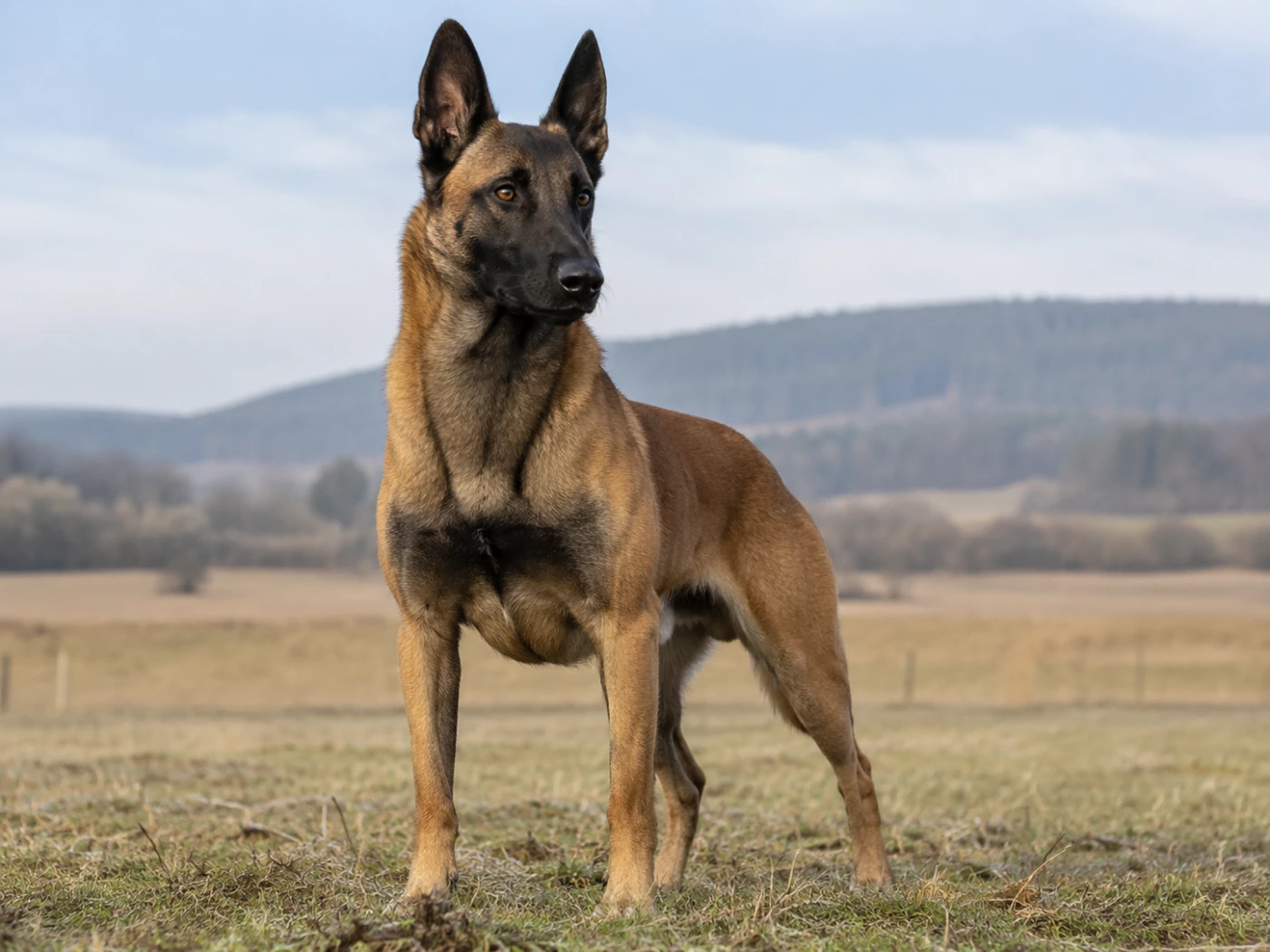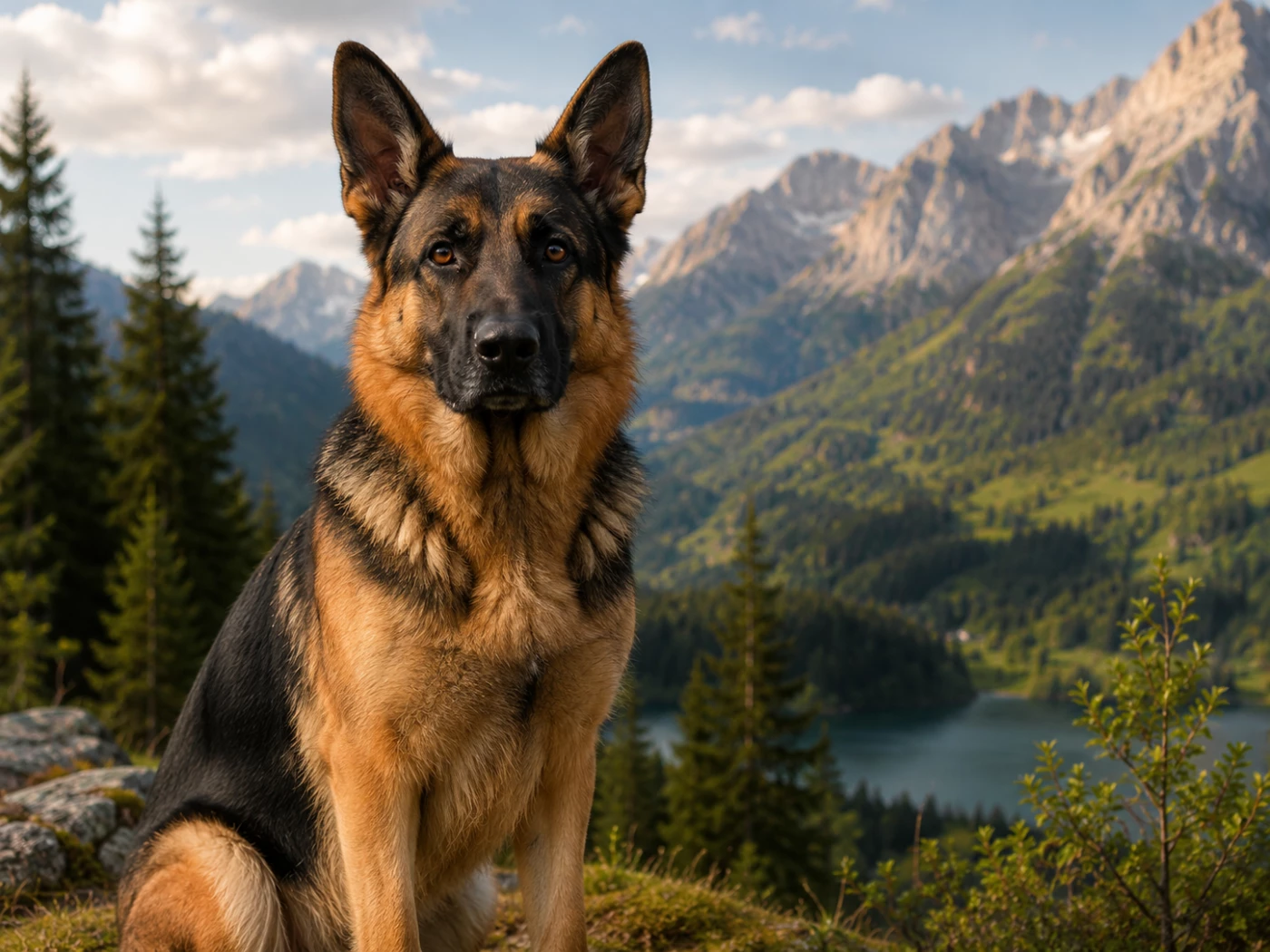
The German Shepherd is one of the most recognized working dogs in the world. It was developed in Germany in the late 1890s, largely through the work of Max von Stephanitz, who set out to standardize a herding and utility dog. The founding German breed society set its standard in 1899. The breed quickly moved beyond farm work into police, military, and service roles, and today it ranks among the most popular breeds in the United States.
That popularity hides a real truth: the German Shepherd is a demanding dog. It is smart, loyal, and physically powerful, but it needs a job, daily exercise, and steady guidance. This guide covers temperament, size, health, cost, and who the breed actually suits — so you can decide before you fall for the look.
German Shepherd at a Glance
Temperament and Behavior
Bonding and the "Velcro" Dog
Alertness Is Not Aggression
Size and Growth
Exercise, Coat, and Daily Care
Health and Health Testing
Health Tests Responsible Breeders Run
Family, Children, Cats, and Apartments
What a German Shepherd Costs
Choosing a Breeder or Seller
Is a German Shepherd Right for You?
| Trait | What to expect |
|---|---|
| Origin | Germany |
| AKC group | Herding |
| Male size | 24–26 inches, 65–90 pounds |
| Female size | 22–24 inches, 50–70 pounds |
| Lifespan | About 7–10 years (AKC); a large UK study found a median near 10.3 years |
| Coat | Dense double coat; heavy year-round shedding with seasonal "blows" |
| Best fit | Active, structured homes that enjoy training |
| Serious watch-out | Fear or untrained reactivity is hard to manage in a powerful adult |
The AKC breed standard describes a direct, self-confident dog that can be reserved without being hostile. It values balance and efficient movement over raw bulk.
A sound German Shepherd is usually attentive, confident, and strongly interested in its people. It tends to be affectionate with family while staying neutral or reserved with strangers. Individual dogs vary widely. Genetics, early development, health, socialization, training, and daily management all shape the adult you end up with.
Drive also varies by line. Show lines tend to be calmer and more companion-focused. Working lines often have higher energy and a stronger work need. Neither is "better," but the line you choose shapes daily life for the next decade, so ask the breeder directly.
Owners frequently call them "velcro dogs." Many German Shepherds follow their person from room to room and dislike being left alone for long stretches. That closeness is appealing, but it should not become an inability to settle alone.
Teach ordinary independence from puppyhood. Short periods behind a gate, in a crate, or resting on a bed help the dog learn it does not need to monitor every movement. A close family bond also does not guarantee confidence in public, so ask how both parents behave in neutral settings, not only at home.
A common belief is that German Shepherds are naturally aggressive. The breed standard does not call for aggression — it calls for a steady, confident dog that is approachable. Much of what people read as aggression is actually fear, poor socialization, or untrained reactivity.
A stable alert dog notices a change and still thinks clearly. A reactive dog becomes too fearful or aroused to respond normally. A common surprise appears in adolescence, when an easy puppy starts scanning, pulling, or barking at dogs and people. Use reward-based training, controlled distance, and gradual exposure. Do not force greetings, and get qualified help early if behavior escalates.
The German Shepherd is a large, athletic dog built for endurance rather than bulk. Per the American Kennel Club, adult males stand 24 to 26 inches at the shoulder and weigh 65 to 90 pounds. Females stand 22 to 24 inches and weigh 50 to 70 pounds. The official standard sets the height ranges; the weight ranges come from the AKC's breed profile.
Growth runs long. Most reach close to full height by 12 to 18 months, but males keep filling out in chest and muscle until two to three years old. A lanky one-year-old often looks like a different dog at age two.
Keeping a growing Shepherd lean is not cosmetic. Extra weight stresses the hips and elbows, the two joints most prone to problems in this breed. Body condition matters more than the number on the scale.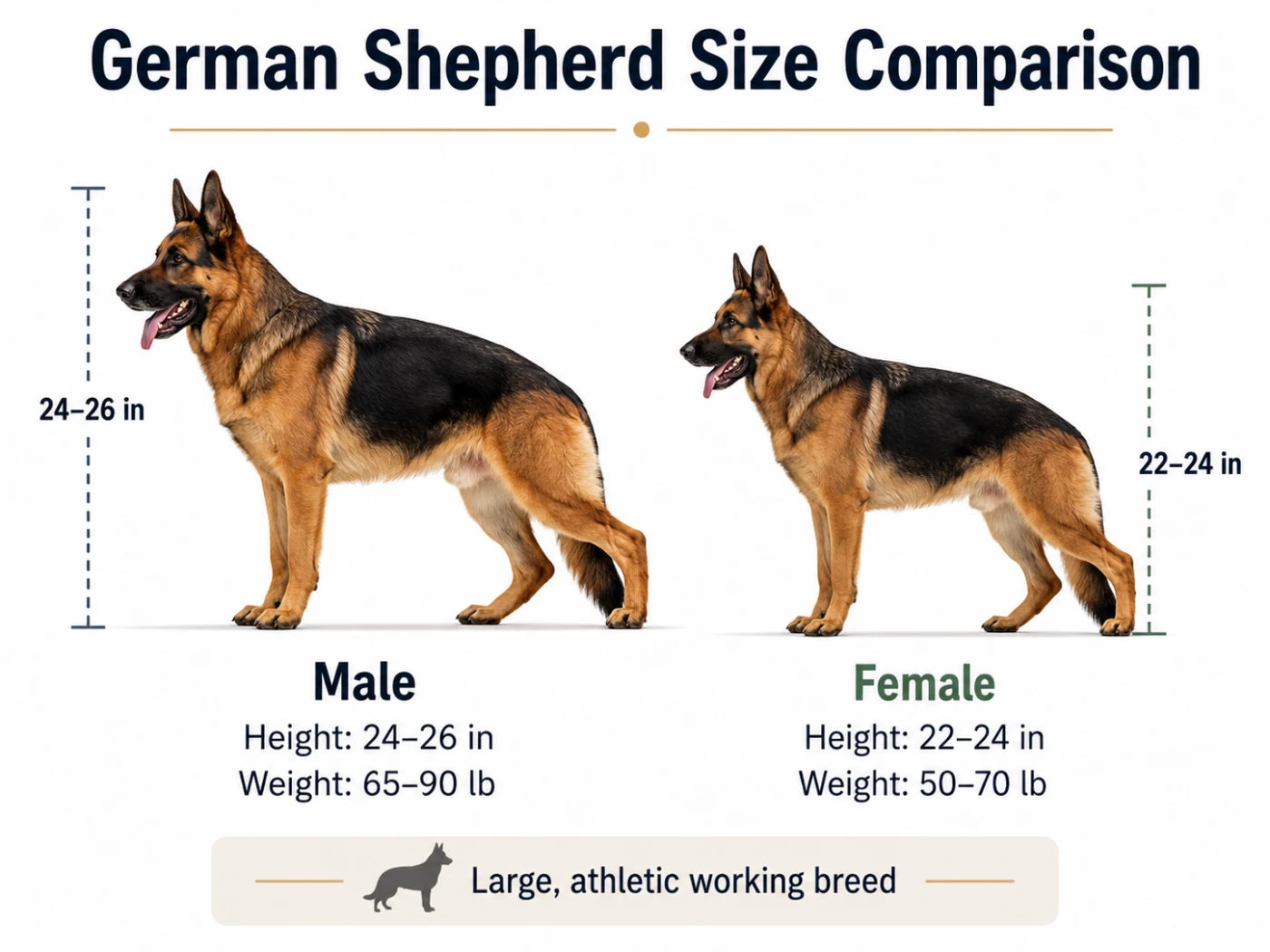
German Shepherds need real exercise — usually one to two hours a day of combined physical activity and mental work. Walks alone rarely cut it. Training games, scent work, fetch, and structured play burn the energy that otherwise turns into chewing, barking, or pacing. Many owners find that focused scent or precision work settles the dog better than adding frantic mileage.
Teach these skills early, before the puppy becomes powerful: recall, loose-leash walking, calm handling for the vet and grooming, a "settle" or place behavior, crate skills, and neutrality around people, dogs, and traffic.
Then there is the coat. German Shepherds shed year-round and "blow" their undercoat heavily twice a year. Owners only half-joke when they call them "German shedders." Plan on brushing several times a week, and daily during seasonal shed, plus a vacuum you trust. Routine care also includes nails, teeth, ears, and parasite prevention.
The German Shepherd is generally healthy for a large breed, but it carries some serious breed-specific risks. The AKC lists a typical lifespan of about 7 to 10 years. A large UK veterinary-record study put the median closer to 10.3 years, and many dogs live longer with good care and weight management.
Hip and elbow dysplasia are the best-known concerns. These are malformed joints that can lead to arthritis and pain. Screening data from the Orthopedic Foundation for Animals (OFA) puts hip dysplasia in roughly 19% of evaluated German Shepherds, which is why hip and elbow testing is standard for responsible breeders. A certificate lowers risk but does not erase it.
Degenerative myelopathy (DM, a progressive spinal cord disease) is another breed-linked risk. The University of Missouri notes it usually starts after age eight with gradual hind-limb weakness and is not painful, which can make it easy to mistake for arthritis early on. There is no cure, but a DNA test for the SOD1 gene identifies at-risk dogs — though two copies of the variant do not guarantee disease.
Exocrine pancreatic insufficiency (EPI, where the pancreas stops making enough digestive enzymes) shows up more in German Shepherds than in most breeds, often in young adults. Signs include weight loss despite a big appetite and loose, pale, high-volume stool. Per the Merck Veterinary Manual, most affected dogs do well long-term once managed with enzyme supplementation and diet.
One emergency every owner should know is bloat, or gastric dilatation-volvulus (GDV, a stomach twist that traps gas and cuts off blood flow). Deep-chested breeds like the German Shepherd are at higher risk. GDV is life-threatening and can become fatal within hours — a swollen, hard belly, unproductive retching, drooling, restlessness, or pale gums call for immediate emergency veterinary care. The Cornell Riney Canine Health Center explains that smaller, more frequent meals and a preventive gastropexy can lower the risk; ask your vet whether a gastropexy makes sense for your dog.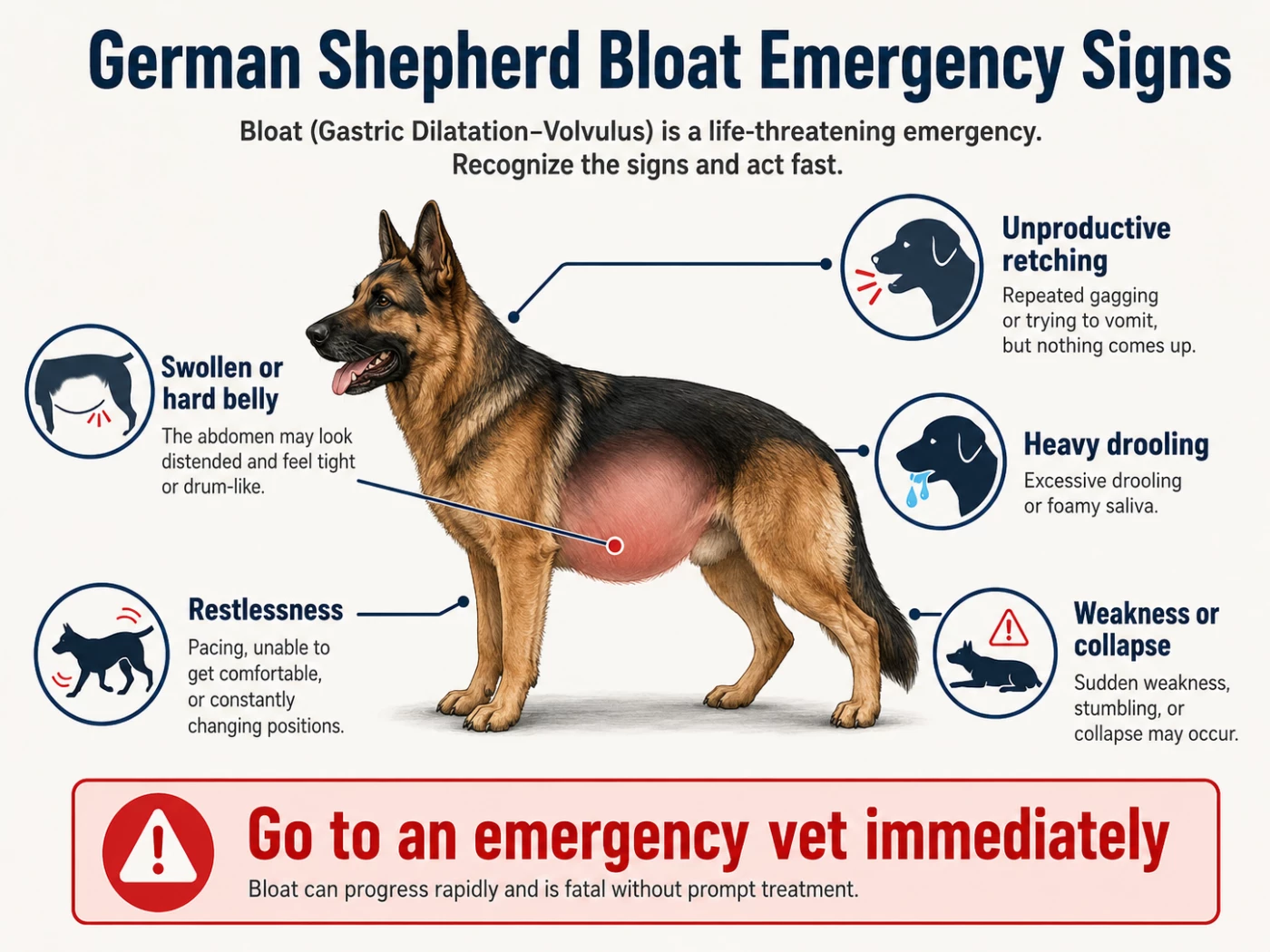
The German Shepherd Dog Club of America sets the health-screening expectations for the breed. For a CHIC number, the club requires OFA hip and elbow evaluations plus submission of GSDCA Temperament Test results. Its higher Health Award of Merit also calls for OFA cardiac and thyroid screening and a published DM (degenerative myelopathy) DNA test.
Ask to see results for both parents, not just a verbal promise. You can verify many results independently through the OFA database. A breeder who tests and shares openly is showing you something important about how they breed.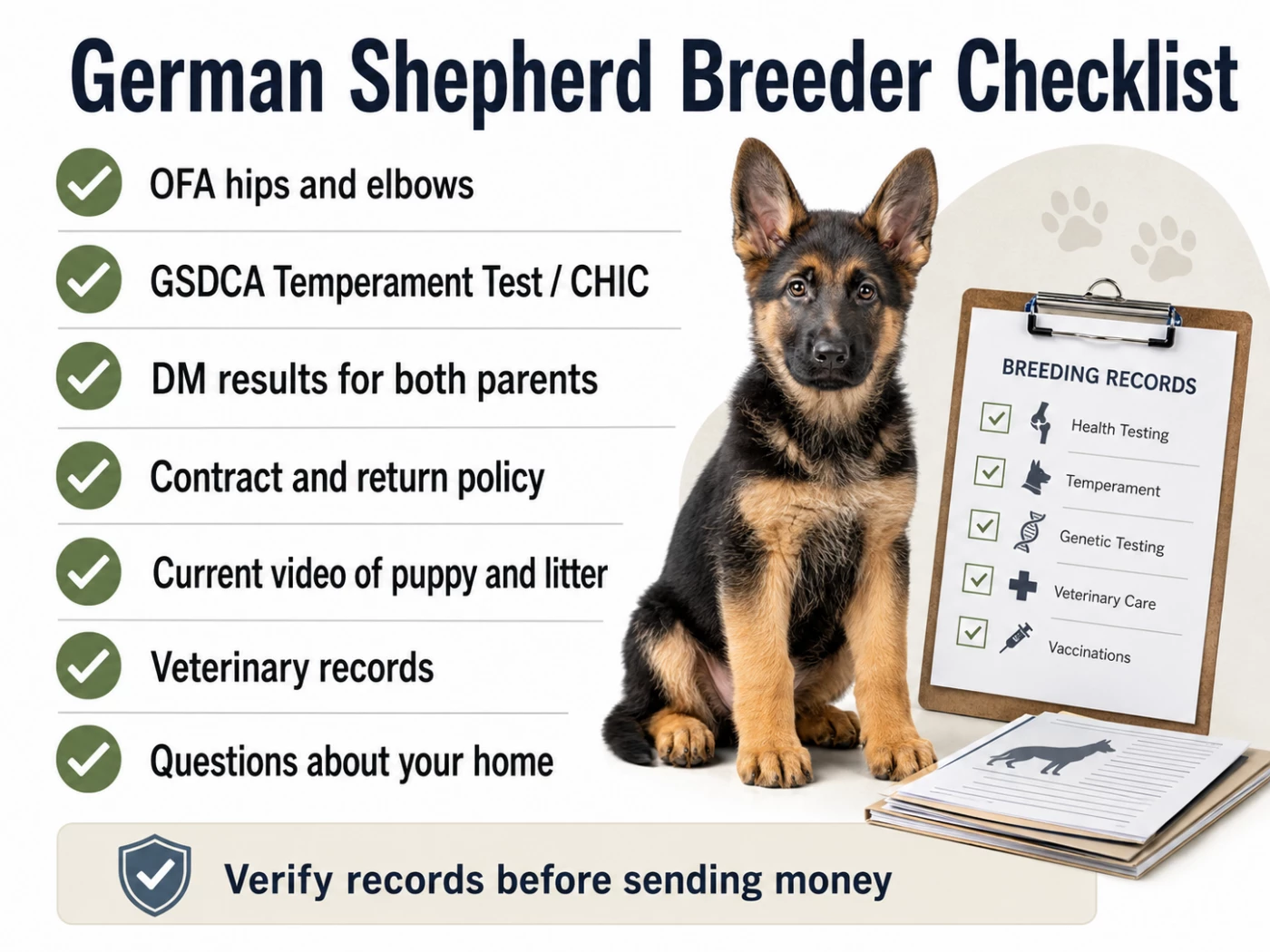
A stable, well-socialized German Shepherd can be a devoted family dog. Its size, speed, and arousal can still overwhelm small children even without aggression, so adults should supervise. Children should not climb on the dog, bother it while it eats or rests, or enter its crate.
Cat compatibility varies. Many German Shepherds live peacefully with cats after early, controlled introductions. Others chase or try to herd them. Use gates, leashes, and escape routes until behavior is predictable.
Apartment living is possible for the right dog and owner. Noise, hallways, decompression space, and the exercise schedule matter more than square footage. Renters should confirm current property and insurance rules before choosing the breed.
Prices vary widely by line, health testing, and training. Averaging them into one number is misleading, so here are the main tiers.
| Source | Typical US asking price |
|---|---|
| Pet-quality puppy, health-tested breeder | $1,500–$3,500 |
| Show, working, or imported lines | $3,500–$10,000 |
| Trained working or protection adult | $10,000+ (finished protection dogs far higher) |
| Shelter or rescue adoption | $250–$600 |
Pet-quality puppies from breeders who do full health testing generally run $1,500 to $3,500. Show prospects, proven working lines, and imported German bloodlines cost more. Professionally trained protection and sport dogs sit far higher because of the training investment, not just the pedigree.
Very cheap "purebred" puppies from anonymous classifieds are a different category. They often skip health testing, and the savings can vanish in vet bills later. These listings are too inconsistent to use as a real price baseline. Budget beyond the puppy price for training, food, equipment, routine vet care, and emergency savings or insurance.
Prices as of June 2026 — check current listings on AllinPets.
A good breeder does more than hand over a puppy. Start with evidence, not coat color or claims about "rare" size. Ask for:
A responsible breeder will usually question the buyer too. Be cautious when every puppy is advertised as perfect for children, protection, and first-time ownership all at once. Directories and listing platforms are a starting point, not a guarantee. AllinPets.com lists German Shepherd breeders nationwide for free, so you can compare options without paying to browse. Start with the German Shepherd listings on AllinPets, or browse all dogs to compare.
The German Shepherd rewards an active, consistent owner who enjoys training. It fits people who want a working partner, will commit to daily exercise and mental work, and can handle heavy shedding and a dog that wants to be near them.
| Good fit | Likely to struggle |
|---|---|
| Active, hands-on owners | People away long hours |
| Want a trainable working partner | Want a low-effort pet |
| Can handle shedding and grooming | Allergy-sensitive or very tidy homes |
| Will socialize and train early | First-timers wanting an easy dog |
The clearest reason not to buy one is simple: you want the look and loyalty, but not the workload. Its best qualities depend on careful breeding, early development, and years of engagement. For more breed research, see other dog breed guides on AllinPets.
AllinPets.com lists German Shepherd breeders across all 50 states for free — browse active listings, compare breeders, and reach out directly with no fees or middlemen.
Written by the AllinPets Editorial Team
Is a German Shepherd a good family dog?
Yes, for active families willing to train and socialize early. German Shepherds bond closely with their people and are often protective and patient with their own kids. Their size and alertness still call for adult supervision around small children.
How much does a German Shepherd puppy cost?
Pet-quality puppies from health-testing breeders usually run $1,500 to $3,500. Show, working, or imported lines cost more, and trained protection adults start around $10,000 and climb higher. Rescue adoption typically costs $250 to $600.
How big do German Shepherds get?
Males stand 24 to 26 inches at the shoulder and weigh 65 to 90 pounds. Females stand 22 to 24 inches and weigh 50 to 70 pounds. They reach full height by 12 to 18 months but keep filling out until two to three years old.
Do German Shepherds shed a lot?
Yes. They shed year-round and blow their undercoat heavily twice a year. Plan on brushing several times a week, daily during seasonal shedding. They are not a good match for homes that need a low-shedding dog.
How much exercise does a German Shepherd need?
Most need one to two hours daily of combined physical and mental activity. Walks alone are rarely enough. Training, scent work, and structured play help prevent boredom-driven barking, chewing, and pacing.
Are German Shepherds easy to train?
They are highly intelligent and eager to work, which makes them very trainable with consistent, reward-based methods. Their smarts cut both ways — they exploit inconsistent rules. Short, regular sessions work better than long, occasional ones.
What health tests should a German Shepherd breeder provide?
At minimum, OFA hip and elbow evaluations and a GSDCA temperament test, which the breed club requires for a CHIC number. Many responsible breeders also test cardiac, thyroid, and the DM (degenerative myelopathy) DNA mutation. Ask to see results for both parents.
Can German Shepherds live with cats?
Many can, especially when raised with cats and introduced slowly. Their herding and prey drive varies by dog, so supervise early interactions and use barriers until behavior is predictable.
This article is for informational purposes only. Always consult a licensed veterinarian.