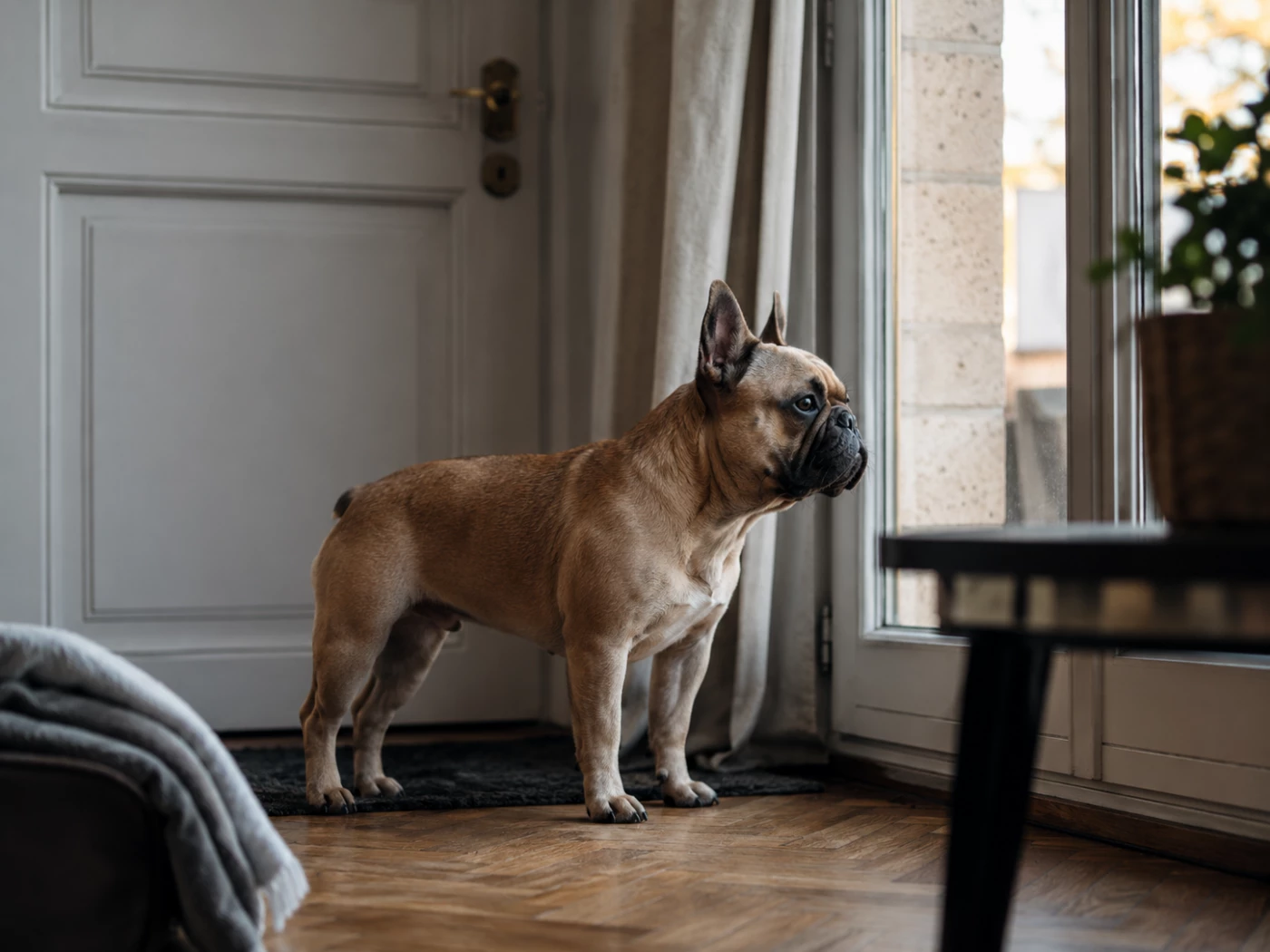
French Bulldog separation anxiety is more than barking when you close the door. It is real distress linked to being left alone or separated from a specific person. A Frenchie with separation anxiety may panic, pace, howl, drool, scratch doors, soil the house, or try to escape soon after you leave.
French Bulldogs are affectionate companion dogs, but being close to people does not automatically mean a dog has separation anxiety. Some Frenchies are bored. Some dislike confinement. Puppies may simply be new to being alone. The first job is to find out what is actually happening.
Table of Contents
What Are the Signs of Separation Anxiety?
Is It Anxiety, Boredom, or Puppy Protest?
How Can a Camera Help?
What Should You Do First?
How Do You Teach a Frenchie to Stay Alone?
Should You Use a Crate?
When Do You Need Professional Help?
Can Separation Anxiety Be Prevented?
Frequently Asked Questions
The strongest clue is timing. Separation-related distress usually begins when the dog notices departure cues, when the owner leaves, or shortly afterward. The behavior may stop when the person returns.
Common signs include:
One sign alone does not confirm separation anxiety. A dog may bark at hallway noise. A puppy may have a toilet accident because it cannot hold its bladder. Destruction may come from boredom or teething.
Frenchie owners should pay special attention to panting and noisy breathing. Anxiety can increase breathing effort, but French Bulldogs can also have brachycephalic airway problems. Do not assume heavy breathing is “just nerves.” A veterinarian should check persistent, loud, or labored breathing.
Separation anxiety is panic or intense distress. Boredom is a lack of suitable activity. Puppy protest is often brief frustration while a young dog learns a new routine.
| What You See | Possible Explanation |
|---|---|
| Brief whining, then sleep | Normal adjustment or mild protest |
| Chewing available objects after a long quiet period | Boredom, teething, or poor management |
| Barking only at sounds in the hallway | Noise sensitivity or alert barking |
| Panic within minutes of departure | Possible separation anxiety |
| Distress only inside a crate | Possible confinement anxiety |
| House soiling at random times | Training, schedule, digestive, urinary, or medical issue |
Medical problems can imitate behavior problems. Pain, urinary disease, digestive upset, cognitive decline, medication effects, and breathing difficulty can all change what a dog does when alone.
A sudden behavior change deserves a veterinary examination. This is especially important for an adult dog that was previously comfortable alone.
Video is one of the most useful tools for understanding separation-related behavior. The American Veterinary Society of Animal Behavior recommends recording the dog during real or planned absences.
Place the camera where you can see the dog’s body, the main exit, and the resting area. Record from before you leave until at least 30 minutes after departure when it is safe to do so.
Look for:
Do not stage a long absence just to test the dog. If panic begins after 30 seconds, you already have useful information. End the test safely and make the next practice easier.
Start by preventing repeated panic. Every severe episode rehearses the problem and can make future departures harder.
Short-term management may include:
Management is not cheating. It gives the dog a break from panic while training begins.
Keep departures calm. You do not need to ignore your dog for long periods. The important part is avoiding a dramatic routine that predicts a frightening event.
Do not punish barking, accidents, or destruction after you return. The dog will not connect delayed punishment with the earlier behavior. Punishment can add fear and make departures more stressful.
Successful training starts below the dog’s panic threshold. That means returning before serious distress begins.
Early stress can be subtle. A dog may stop eating, freeze, stare at the door, lick its lips, or begin panting before it barks.
Food toys can help when the dog is mildly concerned or bored. They are not a cure for panic. A severely anxious dog may refuse even high-value food.
Exercise can support a calmer routine, but it does not treat separation anxiety by itself. French Bulldogs also need exercise that matches their breathing and heat tolerance. Use short walks, sniffing, gentle play, and brief training rather than exhausting the dog before every departure.
The AVSAB humane training guidance recommends reward-based methods for training and behavior problems. Avoid shock collars, yelling, leash corrections, and “cry it out” plans.
A crate helps only when the dog already feels safe inside it. It should not be used to contain a panicking dog.
Some dogs have separation anxiety and confinement anxiety at the same time. The AVSAB discussion of confinement anxiety notes that crating can make distress worse for these dogs.
Warning signs include biting the bars, bending the door, breaking nails, heavy drooling, or throwing the body against the crate. These behaviors can cause serious injury.
A puppy-proofed room, exercise pen, or gated area may work better, but only if video shows the dog is calmer there. Safety matters more than using a particular setup.
Contact your veterinarian when distress is intense, frequent, worsening, or causing injury. Veterinary help is also important when the behavior appears suddenly or includes breathing trouble, collapse, vomiting, diarrhea, pain, or major changes in appetite.
The Merck Veterinary Manual explains that separation anxiety may require behavior modification and medication. Fluoxetine and clomipramine are FDA-approved for canine separation anxiety when used as part of a treatment plan.
Medication is not a shortcut or a sedative substitute for training. For some dogs, it lowers panic enough for learning to begin. Only a veterinarian should diagnose, prescribe, and monitor medication.
Ask for referral to a board-certified veterinary behaviorist or a qualified reward-based behavior professional when:
No plan can guarantee prevention, but puppies and newly adopted dogs can learn that short periods alone are safe.
Begin with very small steps. Let the dog rest behind a gate while you remain nearby. Move around the home without allowing constant following. Pair calm independence with a safe chew or food toy.
Do not jump from constant company to a full workday alone. Build duration gradually. Arrange help when the dog is not ready for the required absence.
Keep socialization broad. A Frenchie should learn to relax with different trusted people and in different safe spaces. The goal is not emotional distance. It is confidence without constant physical access to one person.
For a broader look at temperament, health, care, and daily life, read the complete French Bulldog breed guide.
French Bulldogs are affectionate companion dogs, but that does not prove every Frenchie is unusually prone to separation anxiety. Individual history, routine, genetics, health, and learning experience all matter.
There is no single safe number for every dog. Age, toilet needs, health, training, and emotional comfort matter. A dog with separation anxiety may panic within seconds, while a trained adult may rest comfortably for a reasonable period.
Do not get another dog as a treatment. A second dog may help only when the problem is simple isolation distress. Many dogs with separation anxiety remain distressed because the specific person is absent.
Do not assume the problem will disappear. Mild puppy protest may improve with training, but repeated panic often needs a structured plan and sometimes professional treatment.
Background sound may mask outside noise or help a dog that is mildly unsettled. It will not usually stop true panic on its own.
Many dogs improve greatly, but progress can be slow and uneven. The goal is comfortable, safe independence, not a rushed deadline.
This article is for informational purposes only and does not replace professional veterinary advice. Always consult a licensed veterinarian about your pet’s health.
AllinPets.com lists French Bulldog breeders across all 50 states for free — browse active listings, compare breeders, and reach out directly with no fees or middlemen.
Browse French Bulldog listings on AllinPets.
Written by the AllinPets Editorial Team.