Long Read · 13 min
The Yorkshire Terrier is a tiny toy terrier, bred down from ratting terriers to become one of the most popular lapdogs in the United States. It suits owners who want a bold, affectionate companion with a low-shedding coat and can commit to serious dental care, careful handling, and a real conversation with a breeder about liver shunts. If you want a low-maintenance coat or a dog sturdy enough for rough play with young children, the Yorkshire Terrier is not the right match.
| Trait | Detail |
|---|---|
| Origin | Yorkshire, England, mid-1800s; developed from ratting terriers |
| AKC group | Toy Group (recognized 1885) |
| Size | Must not exceed 7 lb (AKC standard); 6–9 in tall at withers |
| Lifespan | 11–15 years |
| Coat & shedding | Long, silky, hair-like coat; low shedding, high grooming needs |
| Best fit | Adult households or families with older, gentle children |
| Serious watch-out | Dental disease, tracheal collapse, and liver shunt risk |
In this guide:
The Yorkshire Terrier was developed in the county of Yorkshire, England, during the mid-1800s, when Scottish weavers migrating for work brought small terrier-type dogs with them. These were crossed with local ratting terriers to produce a compact, tenacious dog built to control rats in the coal mines and cotton mills of the region, and the breed at the time weighed considerably more than today's Yorkie, commonly around 15 pounds.
Over subsequent decades, breeders selected for a smaller, more refined companion suited to Victorian parlors rather than mill floors, and the American Kennel Club recognized the breed in 1885.
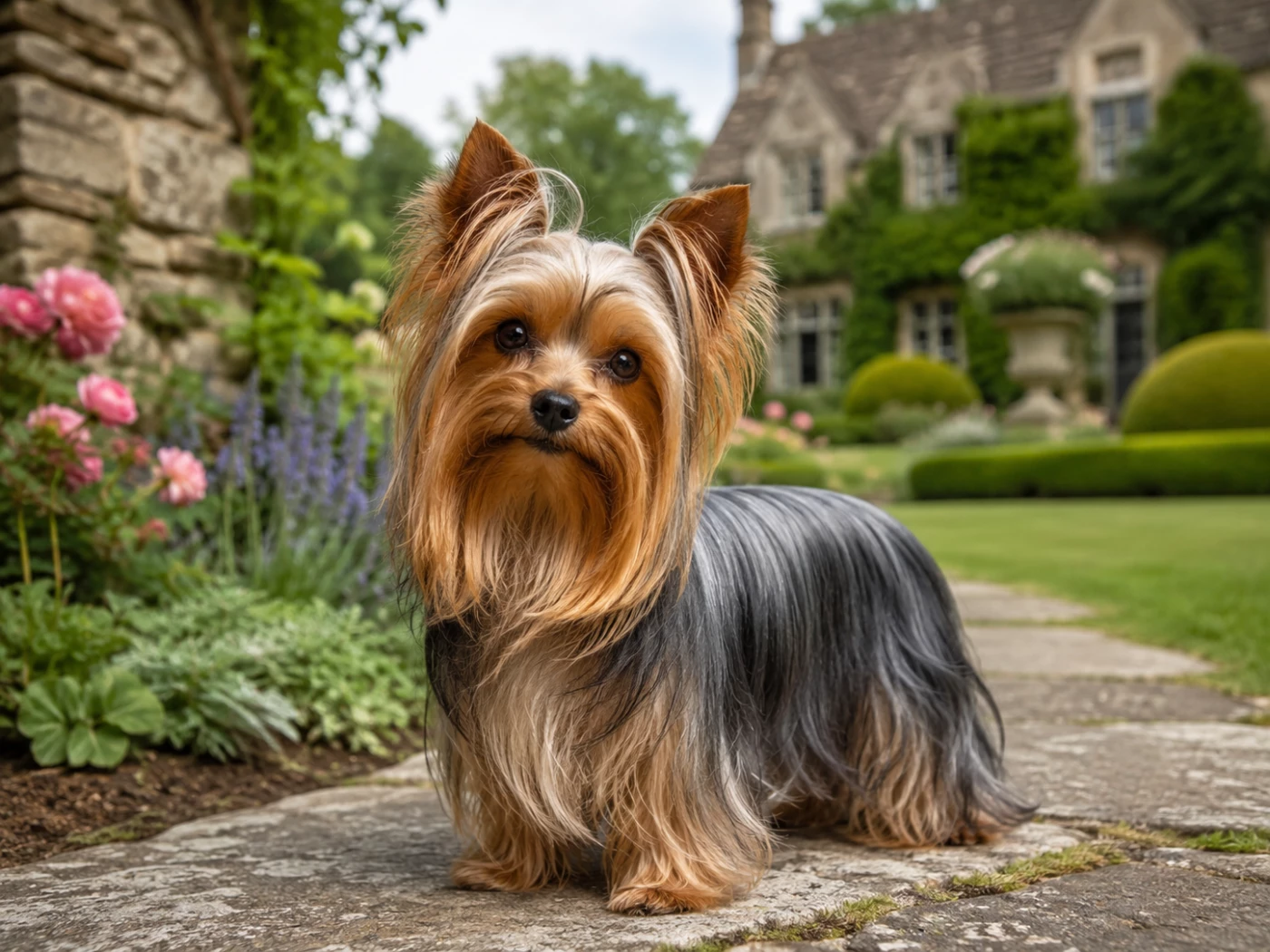
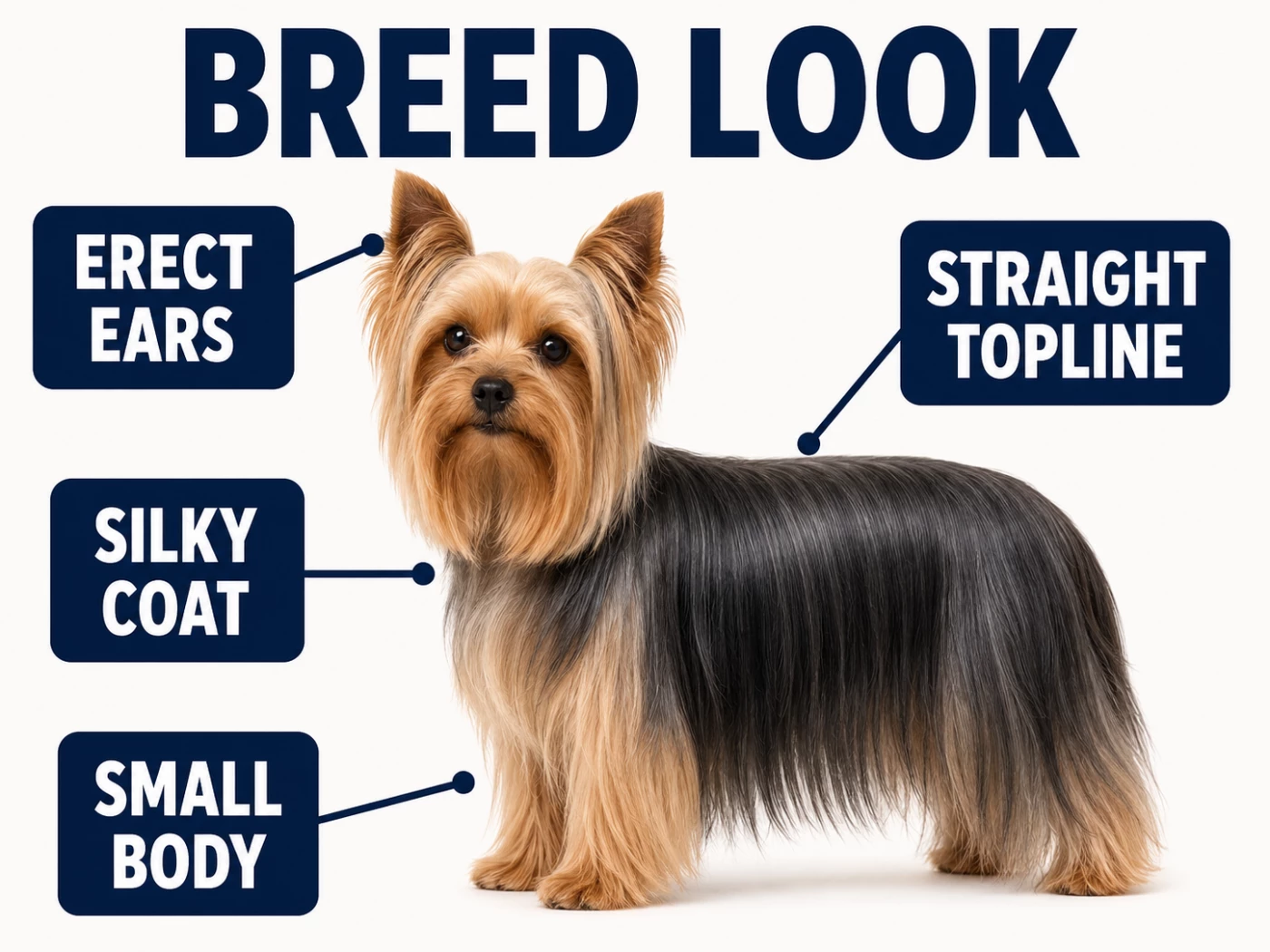
That dual heritage, working ratter turned Victorian lapdog, explains a lot about the modern Yorkie: genuine terrier tenacity and confidence packed into a coat and frame bred for elegance rather than labor. The floor-length, silky coat that defines the breed today is a relatively recent refinement, not a feature of the original working dog.
Yorkshire Terriers are feisty, confident, and affectionate, carrying real terrier spirit despite their toy classification. The AKC standard describes a dog whose high head carriage and confident manner project vigor and self-importance, and most Yorkies live up to that billing. Temperament still varies dog to dog, and early socialization shapes the outcome as much as breed tendency does.
Yorkies do not typically act like fragile lapdogs; they tend to be bold, sometimes bossy, and quick to investigate anything unfamiliar. This is genuine terrier temperament showing through, and it means a Yorkie may confront a much larger dog without hesitation, so supervision around unfamiliar animals matters more than the dog's size would suggest.
Yorkies make attentive little watchdogs and will reliably bark at unfamiliar sounds or visitors, a trait rooted in their working past rather than nervousness. Left unaddressed, this can translate into frequent barking in close-quarters housing, so early, consistent training around triggers pays off.
Yorkies are intelligent and highly trainable when motivated, and reward-based training, the approach recommended by veterinary behavior organizations such as the American Veterinary Society of Animal Behavior for all dogs, tends to work well given how food-driven and eager this breed generally is.
Our guide to getting a dog to listen with reward-based methods applies well here, particularly given the breed's independent streak, which can look like stubbornness but often reflects genuine terrier self-assurance rather than a training failure.
The AKC breed standard specifies that a Yorkshire Terrier must not exceed 7 pounds, with a typical height of 6 to 9 inches at the shoulder, though no official height range appears in the written standard itself. In practice, a meaningful share of pet Yorkies run larger than the show limit; breed surveys have found the majority of adult pet Yorkies fall between 4 and 8 pounds, with a real minority weighing more.
This is a case where the show standard and the range you'll actually encounter genuinely diverge, so treat the 7-pound ceiling as a conformation benchmark rather than a guarantee for every healthy Yorkie.
Most Yorkies reach close to their adult size by 9 to 12 months, with some continuing to fill out slightly afterward. Because even a small amount of excess weight is proportionally significant on a dog this size, and because weight gain measurably worsens both the joint and airway risks common to the breed, body condition score, meaning ribs are felt easily with light pressure and a waist is visible from above, is a more meaningful ongoing check than chasing a specific number on the scale.
Yorkies need real daily exercise despite their size, generally 30 to 60 minutes split across walks and play, to support both physical and mental well-being; this is a genuinely active toy breed, not a sedentary one. Because of the breed's airway sensitivity, a harness rather than a collar is strongly preferred for walks, since pressure on the neck can aggravate tracheal issues.
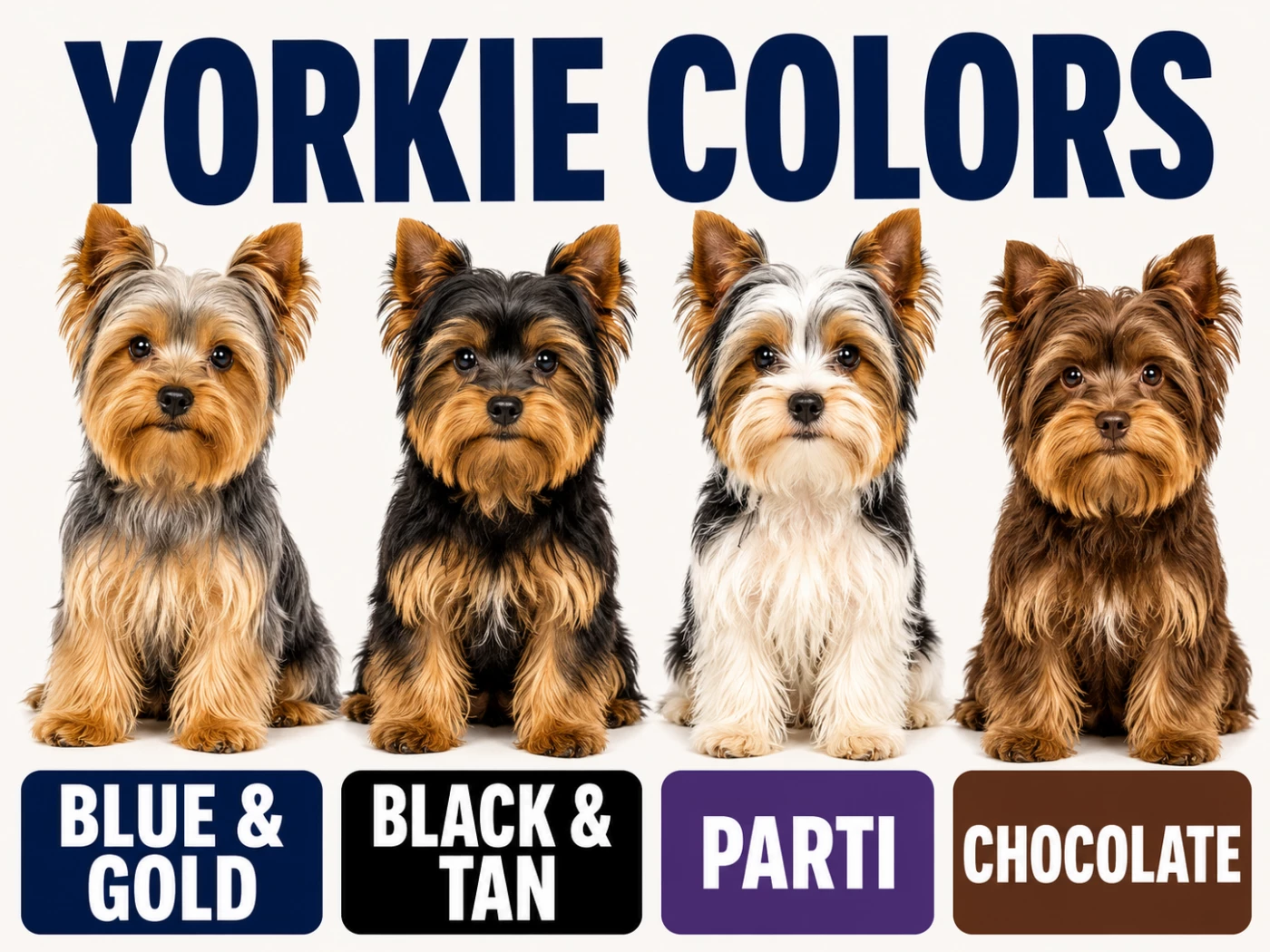
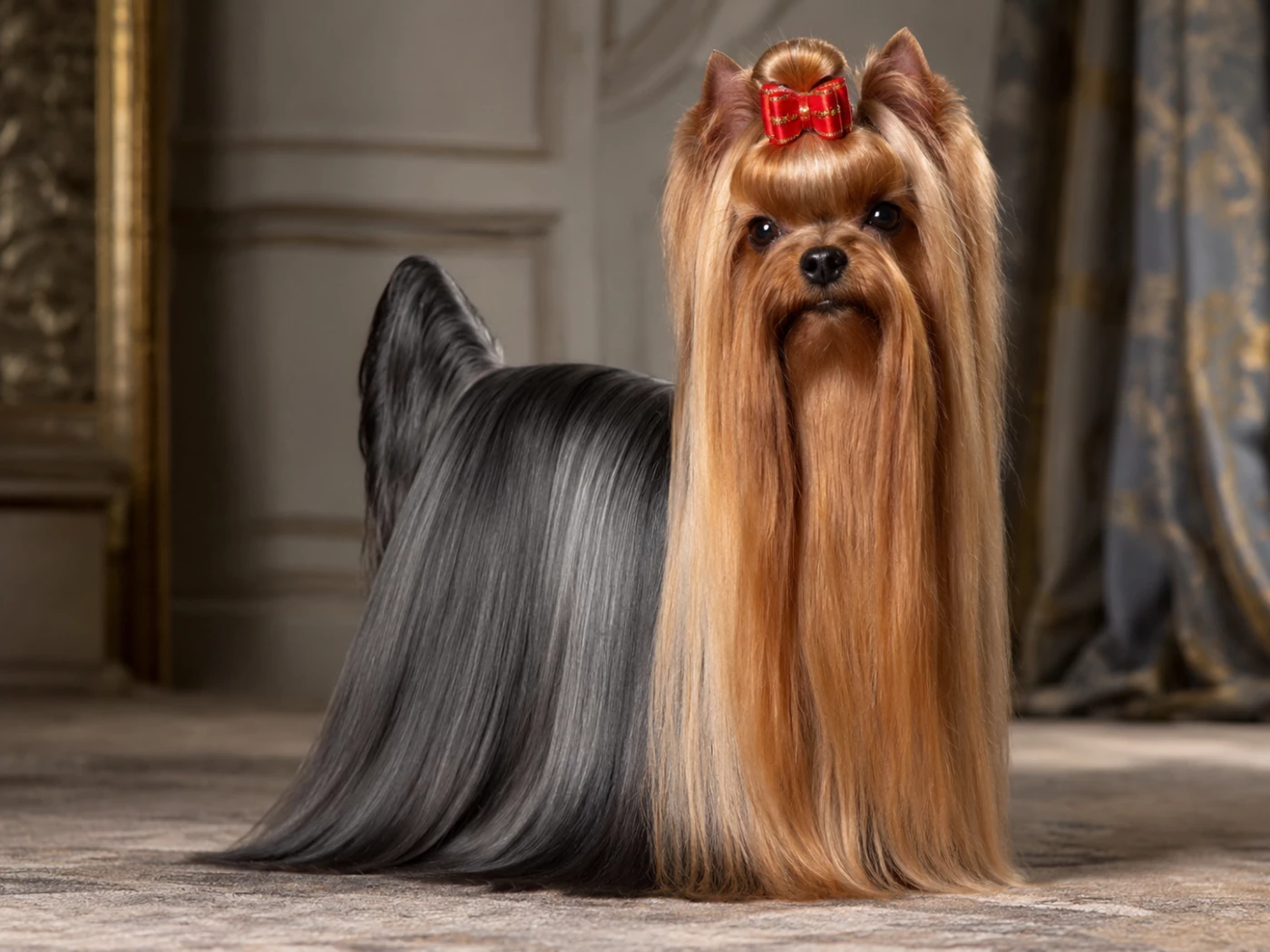
The signature coat is long, silky, and low-shedding, but it requires real commitment: daily brushing to prevent matting if kept long, or a shorter, more manageable "puppy cut" maintained with regular professional grooming. Dental disease is one of the most common problems in this breed, driven by a small jaw with crowded teeth, so daily tooth brushing and regular professional cleanings matter more here than in many larger dogs, a topic our guide to brushing your dog's teeth covers in more depth.
Round out care with routine nail trims and gentle, positive-only handling from puppyhood so grooming and vet visits stay low-stress.
Yorkshire Terriers are generally long-lived, but their small size and genetics create a distinct set of risks. Severity varies from dog to dog, and none of these guarantee a problem in every Yorkie, but they are common enough to plan for.
Dental disease. Small jaws with crowded teeth make Yorkies especially prone to plaque buildup, gum disease, and early tooth loss, and periodontal disease affects the large majority of the breed to some degree. Left unaddressed it can affect far more than the mouth, so daily brushing and regular professional cleanings are a core part of this breed's care rather than an optional extra.
Tracheal collapse. A weakening of the cartilage rings supporting the windpipe, tracheal collapse is common in small breeds and shows up as a dry, honking cough that worsens with excitement, heat, or pulling against a collar. Mild cases are often managed with medication and a harness instead of a collar; severe cases may need surgery, and because being overweight significantly worsens this condition, weight control is one of the most effective preventive steps an owner can take.
Luxating patella. This is a common orthopedic issue in the breed: the kneecap slides out of its normal groove, causing an intermittent skip or hop in the back leg, or in more severe grades, persistent lameness and, over time, arthritis. Milder grades are often managed with weight control and joint support, while more severe grades may require surgical correction.
Portosystemic (liver) shunt. This is an inherited malformation of the blood vessels that lets blood bypass the liver instead of being filtered through it, allowing toxins to build up in the bloodstream. Signs can include poor growth, disorientation, circling, or seizures, often worsening after a high-protein meal. Depending on severity, it is managed with a special diet and medication or corrected surgically, and early detection meaningfully improves outcomes.
Hypoglycemia in puppies. Toy breed puppies, Yorkies included, have small livers and fast metabolisms that make them vulnerable to low blood sugar, especially before three months of age. Warning signs include lethargy, weakness, tremors, or disorientation. This is an emergency: if a young Yorkie puppy shows these signs, offering a small amount of a sugar source like corn syrup on the gums and getting to a veterinarian right away can be lifesaving.
There is no single mandatory CHIC panel specific to Yorkshire Terriers, but reputable breeders still screen proactively. Ask for a patella evaluation on both parents, along with bile acid testing to screen for liver shunt risk, and ask directly whether tracheal or dental problems have appeared in the line. Results should be verifiable through documentation, not just described verbally.
This article is for informational purposes only and does not replace professional veterinary advice. Always consult a licensed veterinarian about your pet's health.
Yorkshire Terriers can do well with families, but their small, somewhat delicate frame means they are generally a better match for households with older, gentle children who understand how to handle a small dog than for homes with toddlers, where accidental rough handling is a real injury risk. Close supervision during any child-dog interaction is essential regardless of age.
Their confident, terrier-rooted personality means introductions to other dogs, especially larger ones, should be gradual and supervised, since a Yorkie's boldness can outpace its ability to defend itself physically. Many Yorkies coexist well with cats, though their terrier instincts can mean a strong interest in smaller pets like rodents or birds.
This breed is genuinely well suited to apartment life given its small size, though its tendency to alert-bark is worth managing early if noise is a concern for neighbors.
Yorkshire Terrier pricing varies widely depending on breeder reputation, region, and lineage.
| Source | Typical price (2026) |
|---|---|
| Pet-quality puppy, reputable breeder | $1,200–$3,500 |
| Champion bloodlines or show-line puppy | $3,500–$10,000+ |
| Rescue or adoption | $100–$500 |
Beyond the purchase price, budget for first-year setup costs, including initial vaccines, spay or neuter, a harness, and basic supplies, which commonly add well over a thousand dollars. Ongoing annual costs run higher than the breed's small size might suggest, largely due to professional grooming every few weeks and the dental care this breed needs throughout its life; total annual ownership costs commonly fall in the $1,750 to $3,500 range. Prices as of July 2026 — check current listings on AllinPets.
These are ranges, not a single national average, and your local market may differ.
For a look at how another popular toy breed compares on cost and daily care, see our Pomeranian breed guide, which shares several of the same size-driven cost considerations.
Yorkshire Terrier pricing swings widely enough that price alone tells you very little about quality. Use this checklist:
For more on vetting sellers, see our guide to choosing a responsible dog breeder, much of which applies across breeds.
| Good fit if you… | Likely to struggle if you… |
|---|---|
| Want a bold, affectionate, low-shedding toy companion | Have toddlers or very young children in the home |
| Can commit to daily dental care and regular grooming | Want a wash-and-go, low-maintenance coat |
| Live in an apartment or smaller space | Cannot manage a dog prone to alert-barking |
| Can budget for potential dental, patella, or liver shunt treatment | Want a sturdy, rough-and-tumble family dog |
The honest verdict: a Yorkshire Terrier makes a spirited, deeply devoted companion for an owner who wants a small dog with genuine terrier character and is prepared to handle it with real care. The main things that catch new owners off guard are how much dental and grooming upkeep this breed needs, and how much bigger its personality runs than its body. Go in prepared for both and a Yorkie rewards you with outsized loyalty.
You can browse Yorkshire Terrier breeders and available puppies, plus rescues and pet services, on AllinPets. AllinPets.com lists Yorkshire Terrier breeders across all 50 states for free. Whether you are buying from a health-testing breeder or adopting from a rescue, start by confirming health clearances and meeting the dog before you commit.
AllinPets.com is a free pet classifieds, breeder directory, and pet services platform covering dogs, cats, 250+ breeds, and all 50 US states.
They can be, especially in homes with older, gentle children, but their small and somewhat delicate build makes them a riskier match for households with toddlers or very young kids without close supervision.
Most Yorkies live 11 to 15 years, one of the longer lifespans among popular breeds, provided dental care, weight, and joint health are managed well.
No. Their coat is often described as more like human hair than typical dog fur, and shedding is minimal, though the coat requires significant brushing and grooming to prevent matting.
A pet-quality puppy from a reputable breeder typically runs $1,200 to $3,500 as of 2026, with champion bloodlines considerably higher and rescue adoption around $100 to $500.
The most common concerns are dental disease, tracheal collapse, and luxating patella, along with liver shunt risk and hypoglycemia in young puppies. Severity varies widely from dog to dog.
Generally yes, though their terrier independence can look like stubbornness. Reward-based training with short, engaging sessions tends to work best for this breed's food motivation and confidence.

Written by the AllinPets Editorial Team.