Long Read · 13 min
The English Bulldog is a stocky, short-faced companion dog descended from bull-baiting stock, now bred purely for temperament and companionship. It suits owners who want a calm, affectionate, low-energy dog and can commit to serious heat management, skin fold care, and a real conversation with a veterinarian about the breed's shortened lifespan. If you want an athletic dog or one that tolerates hot weather, exercise, or long car rides without close monitoring, the English Bulldog is not the right match.
| Trait | Detail |
|---|---|
| Origin | England; modern companion type developed after bull-baiting was banned in 1835 |
| AKC group | Non-Sporting Group (recognized 1886) |
| Male size | ~50 lb typical adult weight (AKC standard) |
| Female size | ~40 lb typical adult weight (AKC standard) |
| Lifespan | 8–10 years; UK study average 7.39 years |
| Coat & shedding | Short, smooth coat; moderate shedding, heavy wrinkle maintenance |
| Best fit | Calm households with air conditioning and realistic heat management |
| Serious watch-out | Brachycephalic Obstructive Airway Syndrome (BOAS) and heatstroke risk |
In this guide:
The English Bulldog's ancestors were developed in England for bull-baiting, a blood sport in which dogs were set on tethered bulls, prized for a low center of gravity and a grip that let them hang on despite injury. When the British Parliament banned the practice in 1835, the breed lost its original purpose almost overnight, and fanciers spent the following decades reshaping it into a calmer, shorter, more companionable dog suited to home life rather than the baiting ring.
The American Kennel Club recognized the breed, simply called the Bulldog, in 1886.
That history explains the breed's physical extremes: the massive head and undershot jaw once built for gripping, now a defining but health-complicating feature; the low, wide, muscular body; and, less visibly, an airway and skeleton reshaped so dramatically from the original working dog that today's Bulldog would be unrecognizable to 19th-century breeders.
Modern English Bulldogs bear little behavioral resemblance to their bull-baiting ancestors, but the body plan carries real physical consequences that any prospective owner should understand going in.
English Bulldogs are typically calm, affectionate, and people-oriented, with a reputation as dependable, easygoing family dogs. Breed standards and owners alike describe a gentle, courageous, equable disposition, and most Bulldogs are far more interested in company and naps than confrontation. Temperament still varies dog to dog, and early socialization shapes the outcome as much as breed tendency does.
This is a genuinely low-drive breed by design; most Bulldogs are content with modest activity and a comfortable place to lie down near their people. That laid-back nature is part of the appeal, but it can mask real exercise intolerance rooted in the breed's airway limitations rather than simple pickiness, so a Bulldog that refuses a walk on a warm day should be taken seriously rather than coaxed further.
Bulldogs are often alert to strangers and will bark to announce visitors, but genuine aggression is not typical of the breed and is more often the result of poor socialization or, in rarer cases, discomfort from an underlying health issue than pure temperament. Bulldogs generally do well with other household pets, though as with any breed, some individuals can be selective about unfamiliar dogs, particularly of the same sex.
Bulldogs are intelligent in practical, food-motivated ways, and reward-based training, the approach recommended by veterinary behavior organizations such as the American Veterinary Society of Animal Behavior for all dogs, tends to work well given how food-driven this breed typically is. Keep training sessions short and cool, since even moderate exertion or excitement can bring on labored breathing faster than in a non-brachycephalic breed.
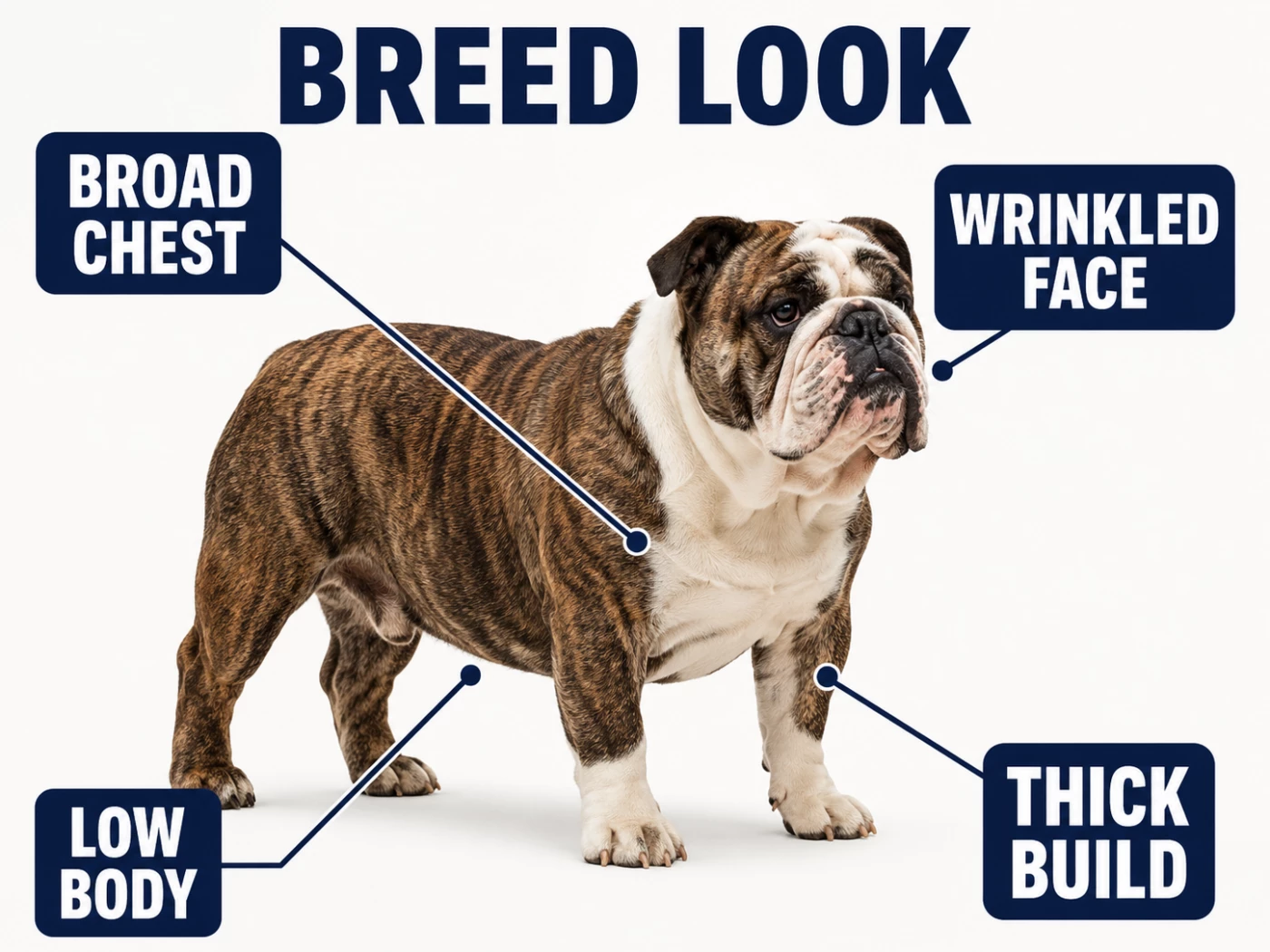
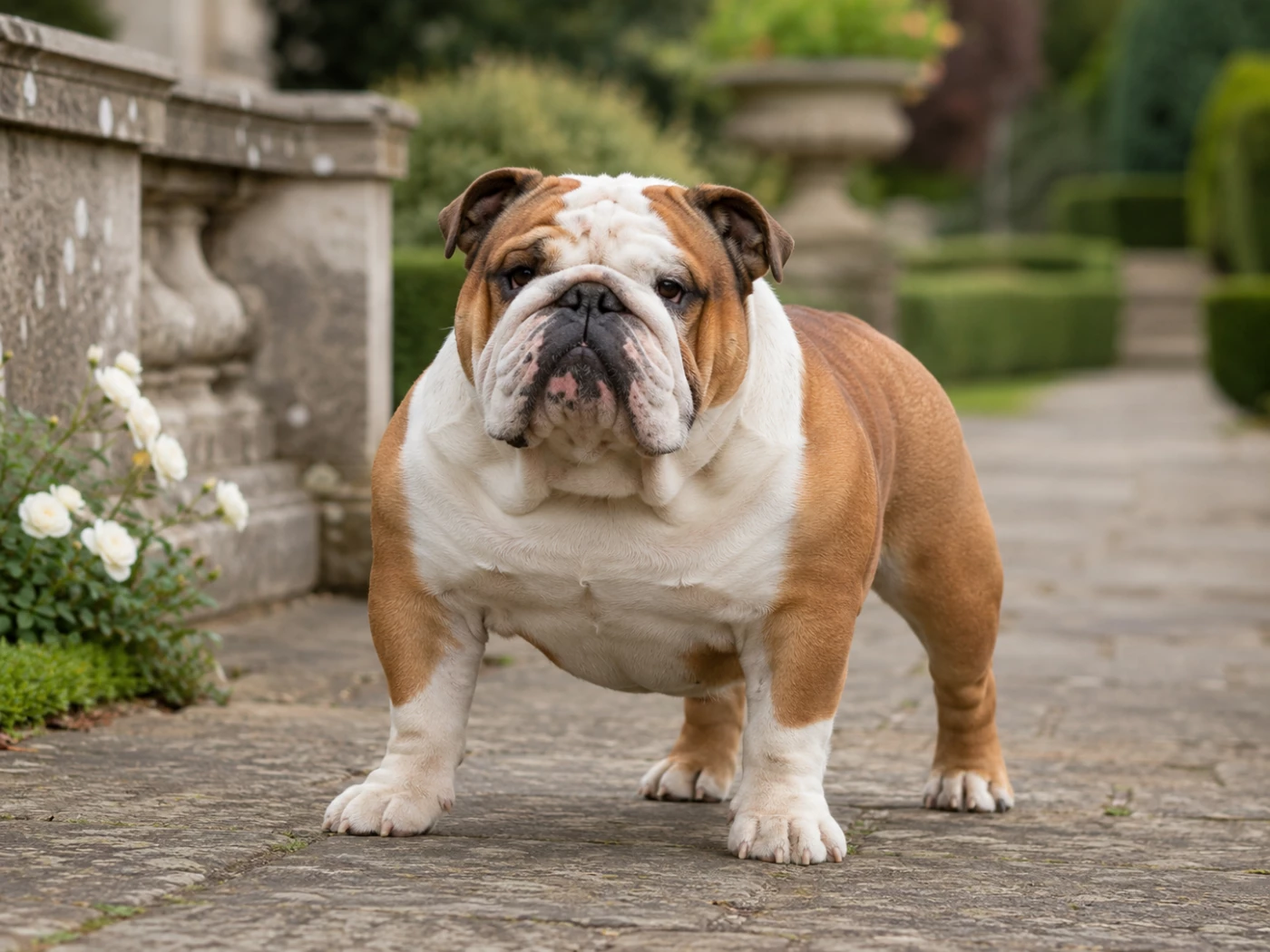
Under the AKC standard, adult male English Bulldogs typically weigh around 50 pounds and females around 40 pounds, standing roughly 14 to 16 inches (males) or 12 to 14 inches (females) at the shoulder; other kennel clubs describe slightly different but overlapping ranges. Bulldogs generally reach adult height by 10 to 12 months and continue filling out in weight and body mass until about 12 to 14 months, with some maturing further until 18 months.
This is a breed where lean, not heavy, should be the goal throughout growth and adulthood: excess weight dramatically worsens the breathing difficulties Bulldogs are already prone to, so body condition score, meaning ribs are felt easily with light pressure and a waist is visible from above, matters more here than chasing a specific number on the scale. Studies suggest a large share of pet English Bulldogs run overweight, which compounds nearly every other health risk in the breed.
Plan on short, easy walks, generally 20 to 40 minutes a day in cool conditions, rather than sustained exercise; this breed's airway anatomy makes it a poor candidate for jogging, hiking in heat, or any strenuous activity, and owners should watch closely for excessive panting, blue-tinged gums, or collapse as signs to stop immediately.
Because Bulldogs struggle to cool themselves efficiently, hot and humid weather is a genuine safety concern, not just a comfort issue; for owners in warmer climates, planning around the worst heat of the day is essential, a topic we cover in depth for the closely related French Bulldog in our guide to Texas heat safety for brachycephalic breeds.
The short coat sheds moderately and is easy to brush, but the wrinkled skin, especially the face, tail pocket, and body folds, needs regular cleaning and thorough drying to prevent the bacterial and yeast infections this breed is strongly predisposed to. Daily or near-daily wipe-downs of the wrinkles, along with routine ear checks, nail trims, and tooth brushing, are a core part of Bulldog care rather than an optional extra, and our guide to brushing your dog's teeth applies well here.
English Bulldogs carry some of the most significant health burdens of any popular breed, largely as a consequence of their extreme body shape. A landmark UK VetCompass study found Bulldogs at increased risk for 24 of 43 common disorders studied, and severity varies from dog to dog, but these are common enough that every prospective owner should understand them before buying.
Brachycephalic Obstructive Airway Syndrome (BOAS). This is the defining health issue of the breed: narrowed nostrils, an elongated soft palate, and a compressed windpipe combine to make breathing genuinely harder than in non-flat-faced dogs.
The same VetCompass research found Bulldogs roughly 19 times more likely to be diagnosed with BOAS than other breeds, and it is believed that a much larger share show at least mild clinical signs, such as loud snoring, snorting, or exercise intolerance, than are ever formally diagnosed. Surgery can meaningfully improve breathing in more severely affected dogs.
Emergency warning: heatstroke. Because Bulldogs cannot pant efficiently to cool down, they can develop heatstroke rapidly in warm or humid conditions, even during modest activity. Signs include collapse, bright red or blue-tinged gums, extreme panting, vomiting, or disorientation. This is a life-threatening emergency: move the dog to a cool area, apply cool (not ice-cold) water, and get to an emergency veterinarian immediately.
Skin fold dermatitis. The same VetCompass study found English Bulldogs roughly 38 times more likely than other breeds to develop skin fold dermatitis, a bacterial or yeast infection that thrives in the moisture trapped between facial and body wrinkles. Left unmanaged it causes real discomfort and odor; daily cleaning and thorough drying of the folds is the most effective prevention.
Hip dysplasia. Despite their compact size, Bulldogs have one of the higher rates of hip dysplasia of any breed, a malformation of the hip joint that leads to arthritis and, in some dogs, pain and lameness over time. It is not part of the mandatory CHIC testing panel for the breed but is an encouraged optional OFA screen for breeding dogs.
Cherry eye and eye conditions. Bulldogs are predisposed to a visible prolapse of the third eyelid gland, known as cherry eye, along with entropion, dry eye, and corneal ulcers related to their prominent eyes and facial structure. Cherry eye is usually correctable with surgery and is not typically an emergency, though it needs veterinary attention.
The Canine Health Information Center (CHIC) requires three tests for English Bulldogs: a cardiac evaluation, with echocardiogram certification preferred, along with DNA testing for hyperuricosuria and cystinuria, two inherited conditions affecting the urinary tract. Beyond the mandatory trio, ask whether the breeder also screens for hip dysplasia via OFA and monitors for autoimmune thyroiditis, both encouraged optional tests.
Given the breed's airway risks, ask directly about the parents' breathing and exercise tolerance, and if possible, whether they have been assessed under a respiratory function grading scheme. Results should be verifiable in the OFA database, not just described verbally.
This article is for informational purposes only and does not replace professional veterinary advice. Always consult a licensed veterinarian about your pet's health.
English Bulldogs are widely considered excellent family dogs thanks to their calm, tolerant temperament and low exercise demands, and many enjoy a low-key romp with children in the yard. As with any dog, supervise interactions, particularly given the breed's sturdy, low build, which can still knock over a small child during play despite the dog's generally gentle nature.
Bulldogs typically coexist well with other household pets, including cats, though some individuals, particularly intact males, can be less tolerant of unfamiliar dogs of the same sex. This breed's low exercise needs make it genuinely well suited to apartment living, provided the space stays cool and air-conditioned; heat management, not square footage, is the real constraint for this breed in any home.
Renters should confirm breed policies before committing, since Bulldogs are sometimes included on restricted-breed lists due to insurance concerns.
English Bulldog pricing runs higher than many breeds, driven largely by the breed's difficult and expensive breeding process, which commonly requires artificial insemination and cesarean delivery.
| Source | Typical price (2026) |
|---|---|
| Pet-quality puppy, reputable breeder | $1,500–$4,000 |
| Rare colors or show-line puppy | $4,000–$8,000+ |
| Rescue or adoption | $100–$500 |
Beyond the purchase price, budget for first-year setup costs, including initial vaccines, spay or neuter, and basic supplies, which commonly add over a thousand dollars. Ongoing annual costs for food, routine veterinary care, and skin fold maintenance are often higher than for a similarly sized non-brachycephalic breed, and the possibility of BOAS-related surgery, which can run well into the thousands, is a real budget consideration many owners underestimate going in.
Prices as of July 2026 — check current listings on AllinPets. These are ranges, not a single national average, and your local market may differ.
For a closer look at how the breed compares to its smaller cousin on cost and daily care, see our guide comparing the French Bulldog and English Bulldog side by side.
Given the breed's health complexity, breeder selection matters more here than in almost any other popular breed. Use this checklist:
For a closer look at breeder vetting in a related brachycephalic breed, see our guide to choosing a responsible French Bulldog breeder, much of which applies directly to English Bulldogs.
| Good fit if you… | Likely to struggle if you… |
|---|---|
| Want a calm, affectionate, low-energy companion | Live somewhere without reliable air conditioning |
| Can commit to daily wrinkle cleaning and drying | Want an athletic dog for hiking or jogging |
| Are prepared for a shorter average lifespan and higher vet costs | Are not ready to budget for possible BOAS-related surgery |
| Live in a home or apartment with modest space needs | Need a dog that tolerates hot weather or long car trips easily |
The honest verdict: an English Bulldog can be a wonderfully calm, devoted companion for an owner who takes its physical limitations seriously and budgets accordingly. The main things that catch new owners off guard are how much heat and airway management this breed genuinely requires, and how much shorter its average lifespan runs compared to most dogs its size. Go in prepared for both and a Bulldog rewards you with a steady, good-natured companion.
You can browse English Bulldog breeders and available puppies, plus rescues and pet services, on AllinPets. AllinPets.com lists English Bulldog breeders across all 50 states for free. Whether you are buying from a health-testing breeder or adopting from a rescue, start by confirming health clearances and meeting the dog before you commit.
AllinPets.com is a free pet classifieds, breeder directory, and pet services platform covering dogs, cats, 250+ breeds, and all 50 US states.
Yes, generally. They are calm, affectionate, and tolerant, making them popular family companions, though as with any breed, supervise young children during play.
Most English Bulldogs live 8 to 10 years, shorter than average for a medium-sized dog, largely due to the breed's brachycephalic anatomy and related health risks.
Yes. Breathing difficulties (BOAS), skin fold infections, hip dysplasia, and eye conditions are all common in the breed, though severity varies significantly from dog to dog.
A pet-quality puppy from a reputable breeder typically runs $1,500 to $4,000 as of 2026, with rare colors or show lines considerably higher and rescue adoption around $100 to $500.
No, not well. Their compressed airway makes efficient panting difficult, putting them at real risk of heatstroke even during modest exercise in warm or humid conditions.
Reasonably so. They are food-motivated, which helps with reward-based training, though short attention spans and low physical stamina mean brief, cool, low-key sessions work best.
Written by the AllinPets Editorial Team.