Long Read · 6 min
In this guide:
Why Your Cavapoo Has Indoor Accidents
How Long Does Potty Training Take?
A Potty Schedule That Works
Using the Crate Effectively
Supervision and Space Management
Diet, Water and Potty Timing
Tips for Faster Success
Cleaning Accidents Properly
When to Seek Help
Cavapoo Potty Training FAQ
To potty train a Cavapoo, take your puppy outside on a frequent, predictable schedule, especially after waking, eating, drinking and playing, and reward it the moment it goes in the right spot. Use a crate and close supervision to prevent accidents, and clean any mistakes with an enzymatic cleaner.
Indoor accidents are normal for a young Cavapoo. Small puppies have small bladders and are still learning where to go. With a steady routine and patience, most puppies make real progress within weeks. This guide covers why accidents happen, how long training takes, a sample schedule, crate use, cleaning and when to ask for help. For an overview of the breed, see the Cavapoo breed overview.
Most accidents happen because a puppy cannot hold it yet or has not yet learned where to go. The AKC explains that puppies can generally hold their bladder for about as many hours as their age in months, up to around 9 months to a year. A 4-month-old puppy, for example, may manage about four hours at most, and less when active.
Common triggers include:
Watch for sniffing the floor, circling, walking toward a door, whining or suddenly squatting. When you see these signs, calmly take your puppy straight outside to its potty spot.
There is no fixed timeline. The AKC notes that it varies a lot from puppy to puppy, with some learning within days and others needing several months. As a typical pattern, many Cavapoo owners see major improvement within about 4 to 8 weeks of consistent work, and reliable control by around 6 to 8 months of age. These are common estimates, not guarantees.
Size can play a part. The AKC says small dogs can be trained successfully but may need extra patience and close management. Toy Cavapoos, with the smallest bladders, may need more frequent trips than larger Minis.
The AKC recommends taking young puppies out first thing in the morning, last thing at night, after naps, after meals, and after drinking, chewing, crate time and play. Build your day around those moments.
| Time | What to do |
|---|---|
| On waking | Carry or walk your puppy straight outside |
| Breakfast | Potty trip shortly after eating |
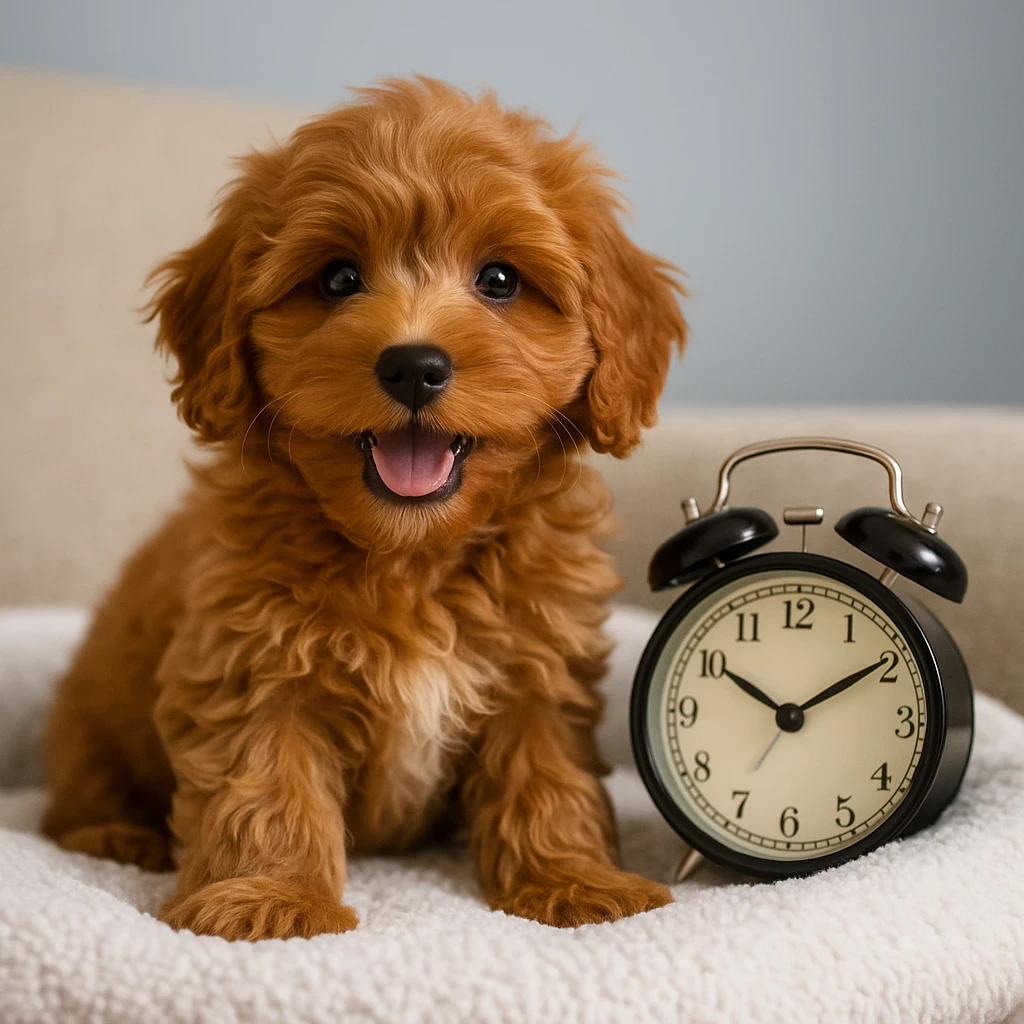
| Through the day | Trips about every 45 to 60 minutes while awake and active |
| After naps and play | Potty trip right away |
| Lunch and dinner | Potty trip shortly after each meal |
| Late evening | Final trip before bed, around 10 to 11 p.m. |
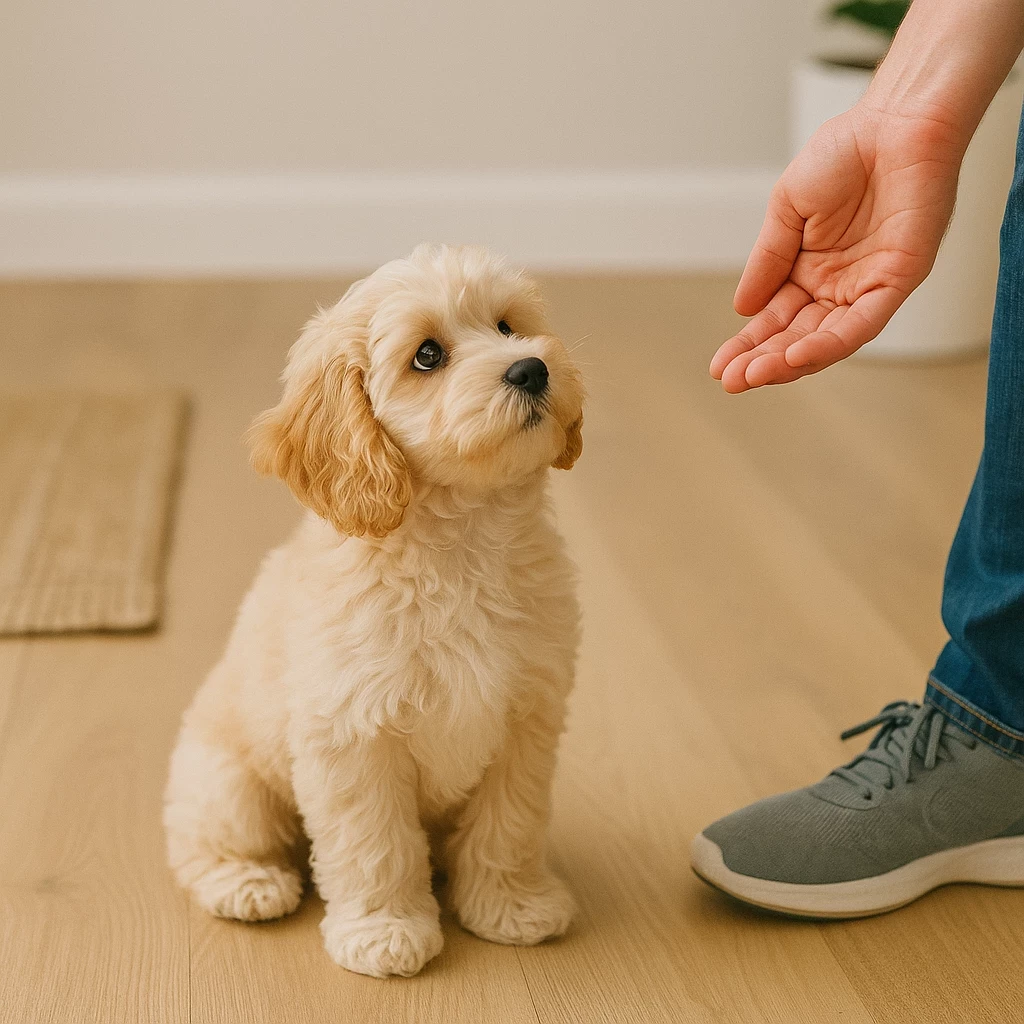
The 45 to 60 minute interval is a common starting point for young puppies, not a fixed rule. Lengthen the gaps gradually as your puppy stays dry. Go to the same spot each time, use a short cue such as "go potty," and reward with a treat and praise the moment your puppy finishes. If your puppy is not interested in treats, see the tips on training a Cavapoo that turns down treats.
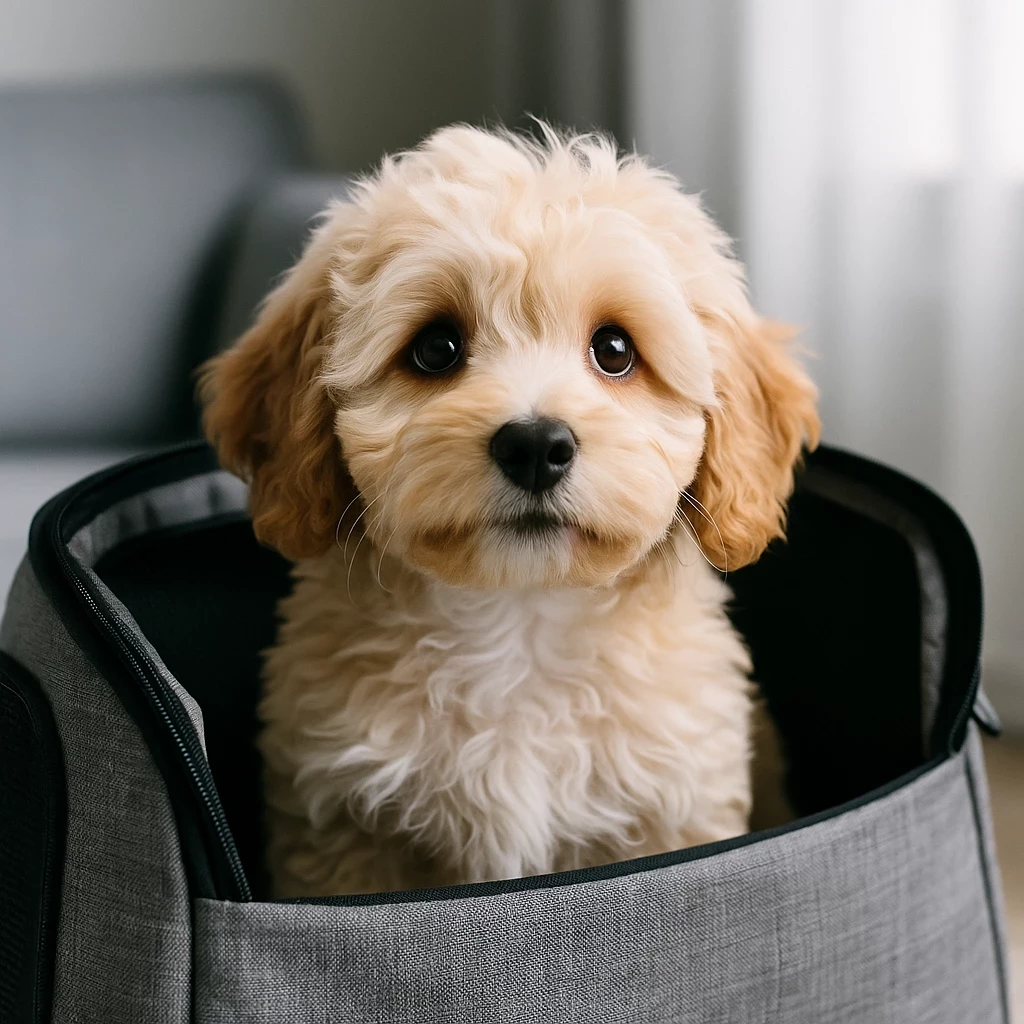
A crate helps because dogs generally avoid soiling where they sleep, as the AKC explains. The crate should be big enough for your puppy to stand, turn around and lie down, but not so big that it can potty in one corner and rest in another.
Never use the crate as punishment. It should feel like a safe den. Night-time routines matter too, and the guide to why a Cavapoo wakes up early explains how to handle early-morning potty calls.
Most accidents happen when no one is watching. When your puppy is loose in the house, keep your eyes on it, and limit its space with baby gates or a pen. When you cannot supervise, use the crate or a safe puppy-proofed area.
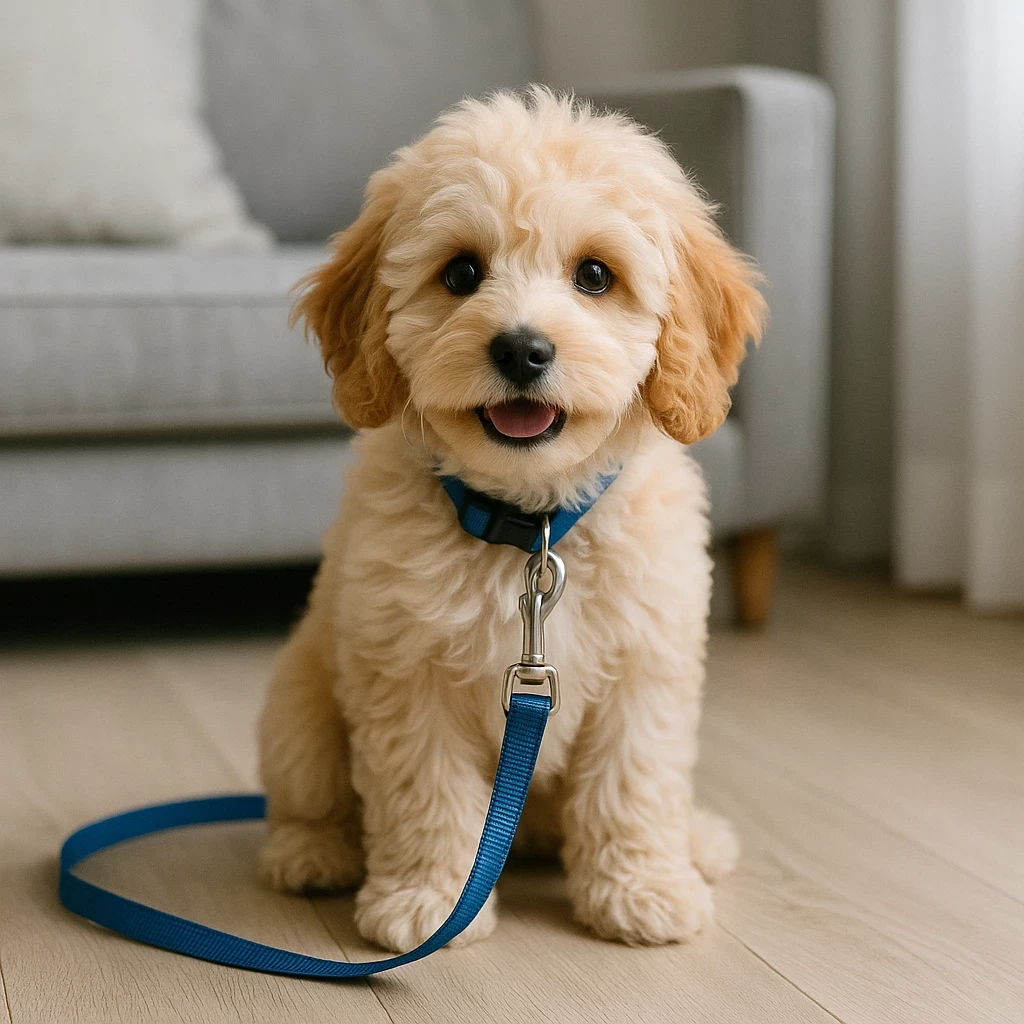
A lightweight house line, a short leash worn indoors under supervision, can help you guide your puppy outside quickly when you spot the warning signs. Learn how to use one safely in the guide to using a house line with a Cavapoo puppy. Give your puppy more freedom one room at a time as it stays dry.
A regular feeding schedule leads to a more regular potty schedule. Many owners feed young Cavapoo puppies three small meals a day, for example around 7 a.m., 1 p.m. and 7 p.m., and take them out about 15 to 30 minutes after each meal. This is a common pattern, not a fixed rule, so ask your vet what suits your puppy.
Reward-based training works best. The AKC notes that punishing accidents is less effective than rewarding the right behavior, and the American Veterinary Society of Animal Behavior (AVSAB) states that evidence supports reward-based methods for all dog training.
Lingering smells can draw your puppy back to the same spot. The AKC recommends keeping enzymatic pet stain cleaners on hand, because they break down the odor rather than just covering it.
Talk to your vet if accidents continue after several weeks of a consistent routine, or if they suddenly start again in a puppy that was doing well. The Merck Veterinary Manual stresses that medical causes should be ruled out before a behavior problem is diagnosed. Problems like a urinary tract infection can cause frequent or sudden accidents.
See your vet sooner if you notice straining, blood in the urine, very frequent small puddles, diarrhea or a puppy that seems unwell. If accidents happen mainly when your puppy is left alone, the cause may be stress rather than training. If you are still choosing a puppy, AllinPets.com lets breeders list Cavapoo puppies for free and helps buyers browse available listings nationwide; ask breeders whether they have started any house training.
It varies from puppy to puppy. Many owners see big improvement within about 4 to 8 weeks of consistent training, with reliable control by around 6 to 8 months. These are typical estimates, not guarantees.
Take a young puppy out after waking, eating, drinking, playing and crate time, and about every 45 to 60 minutes while it is active. The AKC notes that puppies can hold it for roughly as many hours as their age in months.
No. The AKC notes that punishment is less effective than rewarding the right behavior. Calmly clean up and focus on rewarding success outdoors.
Sudden accidents can come from stress, a change in routine or a medical problem such as a urinary tract infection. See your vet to rule out health issues first.
This article is for informational purposes only and does not replace professional veterinary advice. Always consult a licensed veterinarian about your pet's health.
Written by the AllinPets Editorial Team