Long Read · 6 min
In this guide:
What Are Zoomies?
Why Cavapoos Get the Zoomies
Common Zoomie Triggers
How to Manage Zoomies Safely
Zoomies vs Anxiety: How to Tell the Difference
Can You Reduce the Zoomies?
When Zoomies Are a Concern
Cavapoo Zoomies FAQ
Yes, zoomies are normal for a Cavapoo. These sudden bursts of running, spinning and play are a common way for dogs, especially puppies and young dogs, to release built-up energy, and they are usually harmless as long as your dog has a safe space to run.
One minute your Cavapoo is dozing, the next it is racing laps around the sofa. It can look wild, but it is rarely a problem. This guide explains what zoomies are, why they happen, common triggers, how to keep your dog safe, and how to tell happy zoomies from stress. For more on the breed's personality, see the Cavapoo breed guide.
"Zoomies" is the everyday name for what behavior experts call frenetic random activity periods, or FRAPs. Cornell University's College of Veterinary Medicine uses this term and notes that FRAPs are most common in puppies and young dogs, though older dogs can have them now and then.
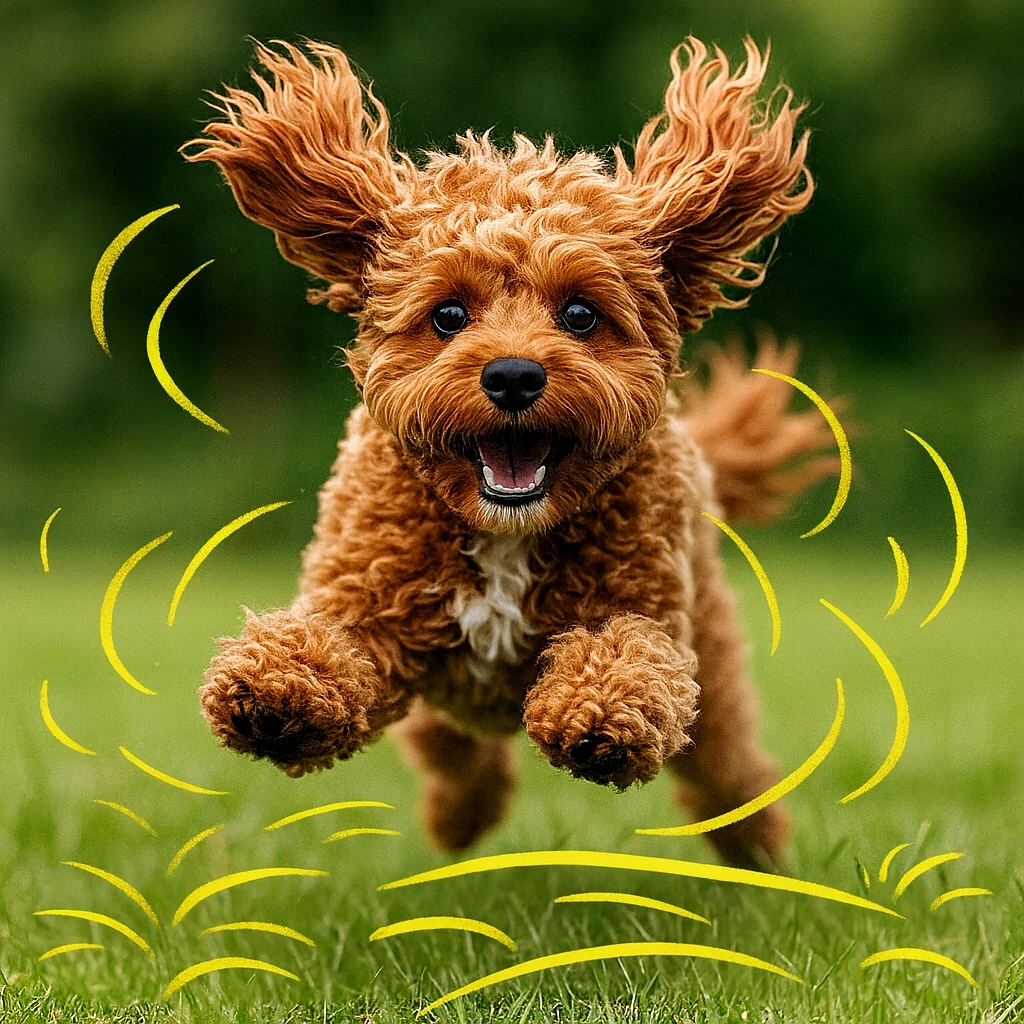
A typical zoomie looks like fast, looping runs, quick turns, spins and play bows, often with a happy, open-mouthed face. The AKC, quoting Certified Applied Animal Behaviorist Jill Goldman, Ph.D., describes zoomies as explosions of energy and says a frequent cause is a buildup of excess energy.
Cavapoos are a cross between the Cavalier King Charles Spaniel and the Poodle, and many owners describe them as playful, curious and quick to get excited. Like other young dogs, a Cavapoo puppy may have energy left over after a quiet stretch, and a sudden burst of running is an easy way to let it out.
There is no research showing that Cavapoos get zoomies more than other breeds. They are simply a normal part of dog behavior, and many small, lively companion dogs have them, especially while young.
Zoomies often happen at predictable moments. Cornell and the AKC list several common triggers:
Many dogs burst into zoomies after a bath, and the AKC lists baths among common triggers. Why it happens is not fully known. It may simply be a release after a stressful or unusual experience. Dry your Cavapoo well and give it a safe space to run so the burst does not lead to slips on wet floors.
Evening zoomies are especially common in puppies. Cornell lists late evening as a typical time for FRAPs. If your Cavapoo zooms every night, it may be a sign that it needs a bit more exercise or brain work during the day.
You do not need to stop a zoomie, but you do need to keep it safe. The AKC notes that zoomies are usually harmless as long as your dog has room to run without getting hurt. Cornell advises keeping a zooming dog away from stairs, slippery floors, obstacles and roads.
Happy zoomies look loose and joyful, while stress looks tense and repetitive. Cornell describes a happy zooming dog as loose and wiggly, and a frightened dog as tense, with wide eyes and a tail clamped to its belly.
| Happy zoomies | Possible stress or fear |
|---|---|
| Loose, wiggly body | Stiff, tense body |
| Relaxed, open-mouthed face | Wide eyes, pinned-back ears |
| Play bows between laps | Tucked or clamped tail |
| Short burst, then settles | Repetitive pacing that does not stop |
| Happens in a relaxed setting | Happens mainly when left alone or after a scare |
If frantic behavior happens mostly when you are away, it may be distress rather than play. Read about separation anxiety signs in Cavapoos to see whether that fits.
You should not try to stop a zoomie in the middle, but you can make them less frequent by meeting your dog's energy needs earlier in the day. Cornell notes that if zoomies happen often or at bad times, a dog may need more exercise and mental stimulation.
Reward-based training is the way to build these habits. The American Veterinary Society of Animal Behavior (AVSAB) states that evidence supports reward-based methods for all dog training. For more ideas, see the guide to Cavapoo temperament and reward-based training.
Most zoomies are nothing to worry about, but a few signs are worth checking. The AKC notes that constant zoomies may point to a larger behavioral problem, and warns about compulsive behavior such as nonstop tail chasing or chasing shadows. Cornell advises contacting a vet if a dog seems to be in pain, frightened or anxious while zooming.
If you notice these, talk to your vet first to rule out pain or other health problems. The AKC suggests a certified applied animal behaviorist or veterinary behaviorist for ongoing behavior concerns. If you are choosing a puppy and want to match energy level to your home, AllinPets.com lets breeders list Cavapoo puppies for free and helps buyers browse available listings nationwide.
Yes. Zoomies, or FRAPs, are a normal and usually harmless way for dogs to release energy, and Cornell notes they are most common in puppies and young dogs.
Do not chase or scold your dog. Keep the area safe, let the burst finish, then calmly offer a toy or a quiet activity.
Evening zoomies often follow a quiet day with leftover energy. More daytime exercise and mental stimulation can help.
There is no set age. Zoomies are most common in young dogs, but the AKC notes that dogs of any age can have them, usually less often as they get older.
This article is for informational purposes only and does not replace professional veterinary advice. Always consult a licensed veterinarian about your pet's health.
Written by the AllinPets Editorial Team