Long Read · 6 min
In this guide:
What Shapes a Cavapoo's Temperament?
Common Personality Traits
What Research Says About Cavapoo Behavior
Cavapoos With Children, Pets and Strangers
Barking and Time Alone
Training a Cavapoo
Socialization and Daily Structure
Is a Cavapoo Good for First-Time Owners?
Cavapoo Temperament FAQ
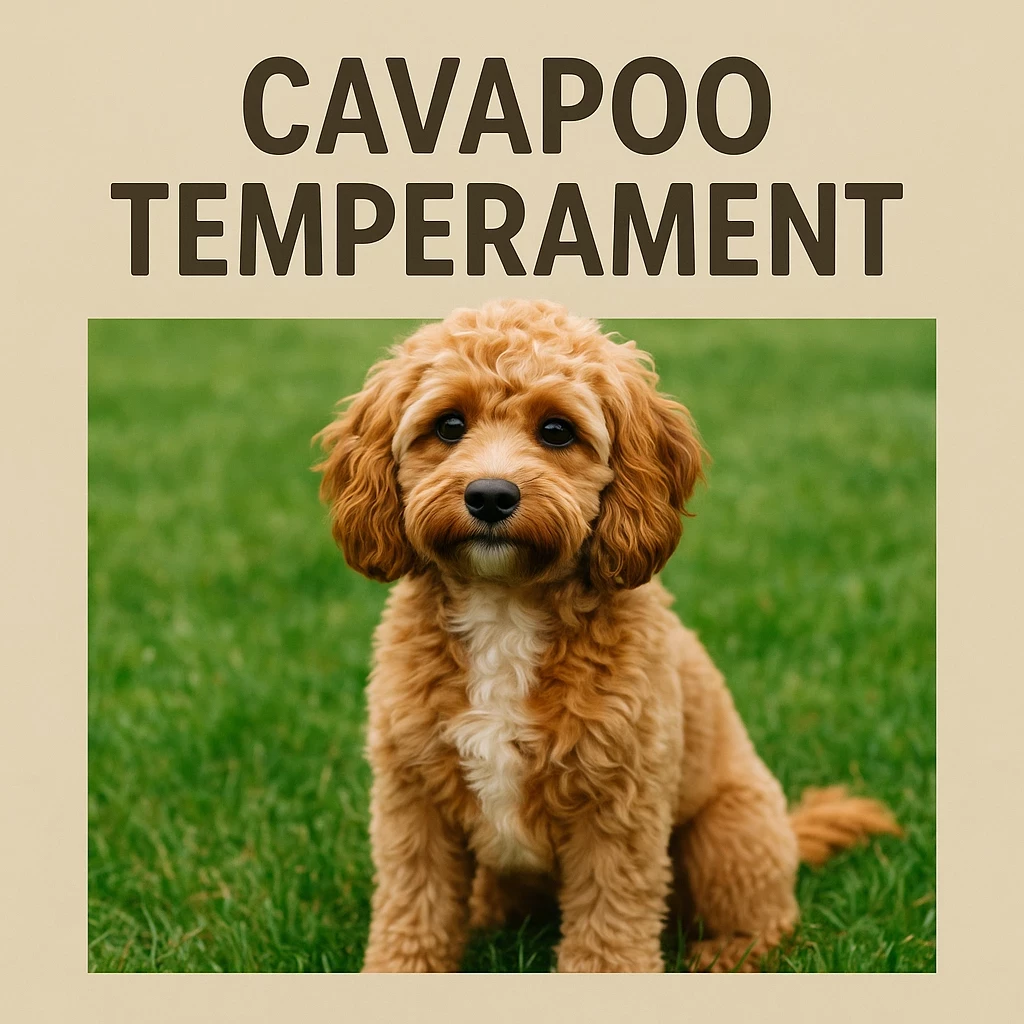
Most Cavapoos are affectionate, people-focused and playful, and many learn quickly with reward-based training. Many also dislike being left alone and can be sensitive, so they do best in homes where someone is around often and training starts early.
Every Cavapoo is an individual. Genetics, early socialization, training and daily routine all shape how a puppy turns out. This guide gives first-time owners a realistic picture of Cavapoo temperament, including what owners report, what research shows, how they get on with children and other pets, and how to train and socialize them. For the full breed overview, see the Cavapoo breed hub.
A Cavapoo's personality comes from a mix of inherited tendencies and life experience. The main influences are:
The parent breeds give a starting point. The AKC standard for the Cavalier King Charles Spaniel describes its temperament as gay, friendly and non-aggressive, with no tendency toward nervousness or shyness. The AKC Poodle standard describes a very active, intelligent dog. A Cavapoo can inherit any mix of these traits, so two littermates raised in different homes can grow into quite different adults.
These traits are widely reported by owners, but they are tendencies, not guarantees. Individual dogs vary.
Many Cavapoos follow their owners from room to room and like to be close by. This is often just affection. The Merck Veterinary Manual notes that following family members around the house does not, on its own, mean a dog is at higher risk of separation distress.
Owners often describe Cavapoos leaning into a hand, resting beside them, bringing toys or nudging for play. Males and females show similar affection. Upbringing and environment usually matter more than sex.
Most Cavapoos balance calm time with short bursts of play. Evening "zoomies" are common, especially in puppies, and are usually normal. The guide to why Cavapoos get sudden bursts of energy explains what is typical.
Cavapoos can do well in apartments, suburbs and cities. A predictable routine of walks, play and rest matters more than the size of the home.
The largest study so far is a 2026 paper in PLOS One by Bryson and colleagues. It compared owner reports on 9,402 dogs in the UK, including 985 Cavapoos, using the C-BARQ behavior questionnaire, and found:
These are group averages from owner surveys, not predictions for any single puppy. They do suggest two practical priorities for Cavapoo owners: teach your puppy to be comfortable alone, and invest in gentle, positive socialization early.
Many Cavapoos do well with gentle children and well-socialized pets. Their small size means young children should always be supervised and taught to handle the dog calmly, since rough play can scare or hurt a small dog.
Because the 2026 study found higher fear scores toward strangers and unfamiliar dogs than in Cavaliers, avoid pushing a nervous puppy into overwhelming situations. Short, positive experiences build confidence better than flooding.
Barking varies from dog to dog. Many Cavapoos bark to alert you to visitors or to ask for attention, and training and routine shape how much they bark. Reward quiet behavior rather than scolding noise.
Time alone is the bigger issue for many owners. Given the separation-related findings above, start practicing short absences from the first weeks, with a chew toy or puzzle feeder, and build up slowly. If your Cavapoo becomes distressed when you leave, the guide to helping a Cavapoo cope with being alone walks through the steps.
Cavapoos usually respond well to short, positive training sessions. Reward-based training is the recommended approach for every dog. The American Veterinary Society of Animal Behavior (AVSAB) states that evidence supports reward-based methods for all dog training, and that aversive methods have no place in behavior modification.
If your Cavapoo does not respond to a cue, there are many possible reasons, including distraction, unclear signals, not enough practice, a reward that is not motivating enough, or physical discomfort. It is rarely simple stubbornness. If food does not motivate your puppy, see the tips on training a puppy that is not food-driven.
Early socialization is one of the most important things you can do for your Cavapoo's temperament. AVSAB describes a sensitive period of socialization that lasts until about 3 to 4 months of age. Its guidelines say puppies can start socialization classes as early as 7 to 8 weeks, once they have had at least one set of vaccines at least seven days before the first class. AVSAB also states that behavior problems, not infectious diseases, are the number one cause of death for dogs under 3 years of age.
Healthy socialization means calm, positive exposure to:
Pair socialization with a predictable daily routine. Regular times for meals, walks, play and rest help a sensitive dog feel secure, and daily brain work such as puzzle feeders and scent games keeps a bright Cavapoo content.
A good start also begins before you bring your puppy home. Ask breeders how they socialize their litters, and use the checklist in the guide to questions to ask when choosing a Cavapoo breeder.
Yes, for many first-time owners. A Cavapoo's small size, affectionate nature and trainability make it a common first dog. It is a better fit if someone is home often, you are ready to work on time alone and socialization early, and you can keep up with grooming.
It may be a harder fit if the dog would be alone for long workdays with no midday care, or if no one has time for daily training and walks. When you are ready to look for a puppy, AllinPets.com lets breeders list Cavapoo puppies for free and helps buyers browse available listings nationwide.
It varies. Many bark to alert or ask for attention, and training, exercise and routine strongly affect how much they bark.
Many can be. A 2026 study found Cavapoos had more owner-reported separation problems than Cavalier King Charles Spaniels, so practice short absences from early puppyhood.
Many are gentle with respectful children. Always supervise young kids, since a small dog can be hurt by rough handling.
There is no reliable evidence that one sex is calmer. Upbringing, socialization and individual personality matter far more than sex.
This article is for informational purposes only and does not replace professional veterinary advice. Always consult a licensed veterinarian about your pet's health.
Written by the AllinPets Editorial Team